
How to Choose a Waterproofing Contractor in Singapore
Choose a waterproofing contractor by how clearly they explain the problem and the proposed solution. Four checks matter: a diagnosis supported by evidence, competence relevant to the job, a comparable written scope and a clear completion arrangement. A low price, long warranty or impressive badge cannot establish those things on its own.
This is a guide to selecting a contractor for a private home. If you already have competing proposals, use it to identify the questions that need resolving before you compare totals.
1. Ask the contractor to explain the diagnosis
Start with a simple question: “Where do you think the water is entering, and what evidence supports that?” A useful answer distinguishes observations from assumptions and identifies anything the initial visit could not establish.
A contractor may reasonably recommend further access, testing or opening-up before offering a final repair scope. Ask what that investigation will answer, what it costs and whether the findings could change the proposed method. An honest limit is more useful than certainty unsupported by inspection.
Give each bidder the same photographs, leak history and previous repair records. If one proposes a plumbing repair and another a membrane replacement, you do not yet have two comparable waterproofing quotations. First resolve why their diagnoses differ.
Beware of choosing a method simply because it preserves every finish. Non-hacking work can be appropriate, but avoiding removal is a practical benefit only when the repair addresses the defect.
2. Check competence for the actual scope
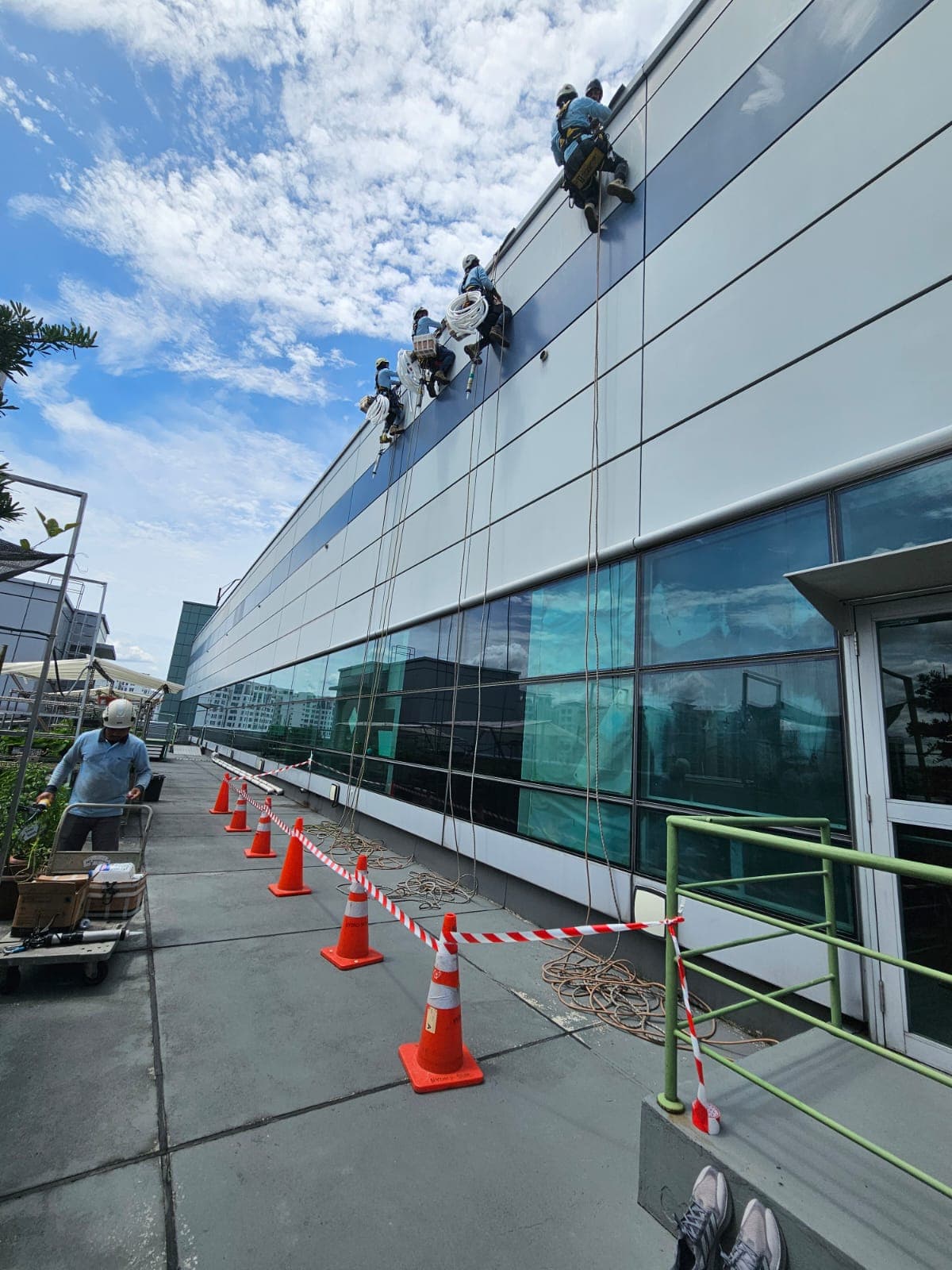
A bathroom, a factory roof and a high-level façade need different working arrangements. Ask about comparable work and the people who will perform and supervise the proposed tasks. A general company profile should not substitute for explaining the specific job.
Where qualifications, registrations or insurance are claimed, check their current status, scope and relevance. The BCA directory explains its Contractors Registration System; registration categories should not be treated as a blanket guarantee of every service or outcome.
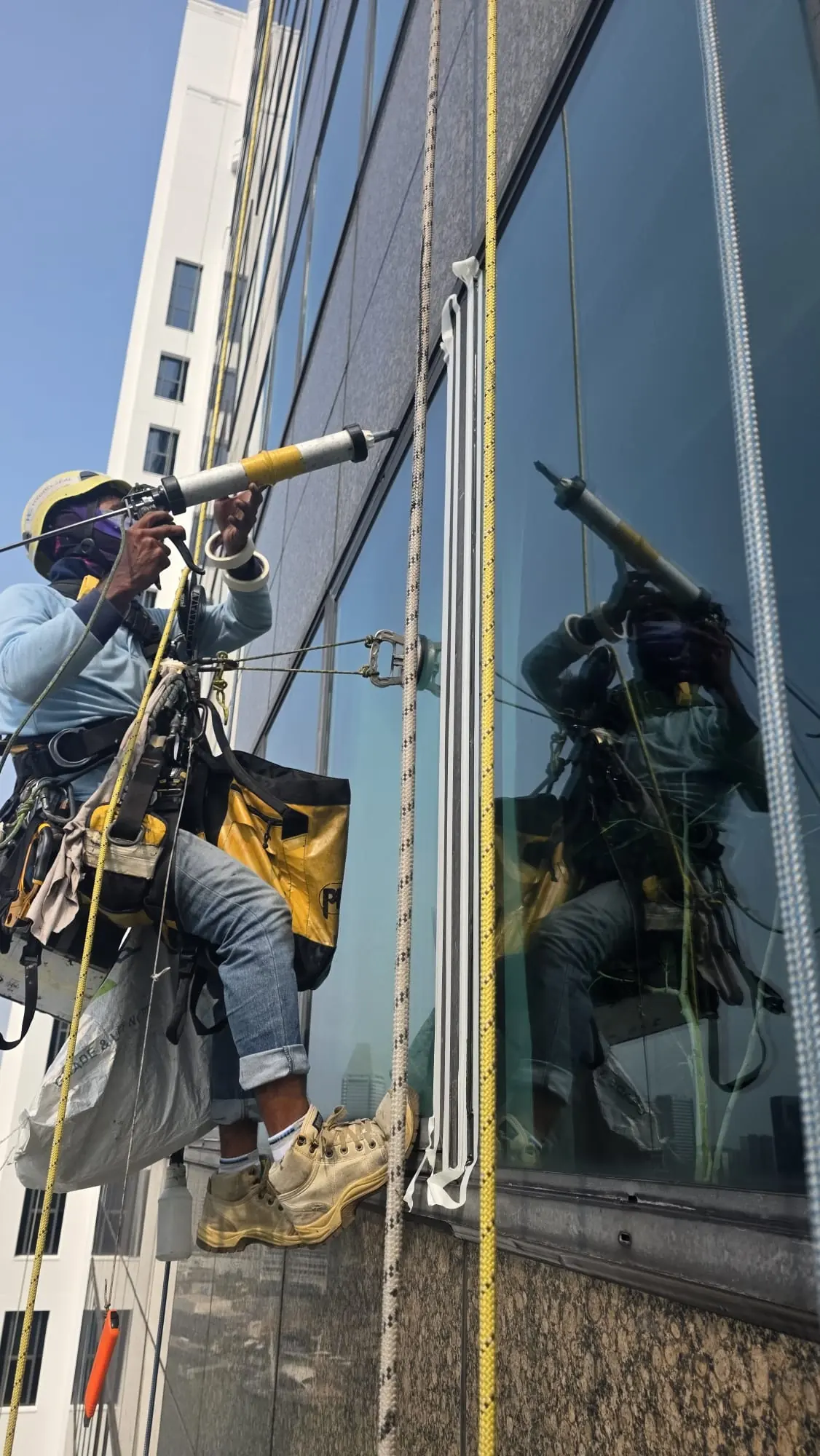
If rope access is involved, separate technician qualifications from company status and from the competence needed for the repair itself. If statutory façade inspection is required, the appointed Competent Person has a different role from the access contractor. Our PFI guide explains that distinction.
Reference photographs can help show the kind of work undertaken. They do not prove a success rate, a customer's identity or a measured saving. A contractor should share only project information they are entitled to disclose.
3. Compare the same written scope
The cheapest proposal may simply include fewer tasks. It may also reflect a valid, more limited repair. Ask the contractor to explain the difference without assuming either quotation is inherently wrong.
A useful comparison sheet has these headings:
Problem and extent: the findings, repair locations, quantities and areas excluded.
Method: the selected product or system, preparation, treatment of corners and penetrations, and connection to adjoining surfaces.
Access and protection: how workers reach the area, what furniture or finishes need protection and which permissions are needed.
Programme: work stages, weather or curing constraints, likely room unavailability and return-to-use requirements.
Reinstatement: removal, disposal, replacement finishes, cleaning and any items left to another trade.
Price: GST treatment, payment stages, optional items and how unforeseen conditions or variations will be agreed.
Ask for a written variation before additional work proceeds. A useful variation explains the new finding, the changed scope and the price or programme effect, rather than presenting an unexplained extra charge after completion.
4. Agree what completion and warranty mean
Before accepting the quotation, ask what evidence will show that the contracted work is complete. Depending on the scope, this may involve photographs of concealed details, documented checks and observation under relevant conditions. A dry surface on a sunny afternoon is not the same evidence as a defined leak-verification procedure.
Clarify what happens if the same symptom returns. Who assesses it, how quickly should it be reported and what information will be needed? Do not assume a warranty covers all future leaks anywhere in the home.
Read the actual terms: covered locations, duration, exclusions, maintenance duties and the party responsible. Manufacturer product coverage and installer workmanship coverage may differ. A longer period is not automatically better if the covered obligation is unclear.
A short conversation before you appoint
You should be able to explain, in your own words, what is being repaired, why that method is suitable and what remains outside the scope. If you cannot, ask for the proposal to be clarified.
Keep the signed quotation, approved variations, completion records and warranty together. These will be useful if the property is renovated, transferred or investigated again.
For the financial side, our waterproofing cost guide explains how to compare scope without relying on an unsupported price range. Hydroseal offers a free, no-obligation site inspection, followed by a proposal setting out the recommended work and applicable terms.
Unsure about your property’s waterproofing?
Hydroseal offers a free, no-obligation site inspection, honest advice, no pressure.
Get a free quote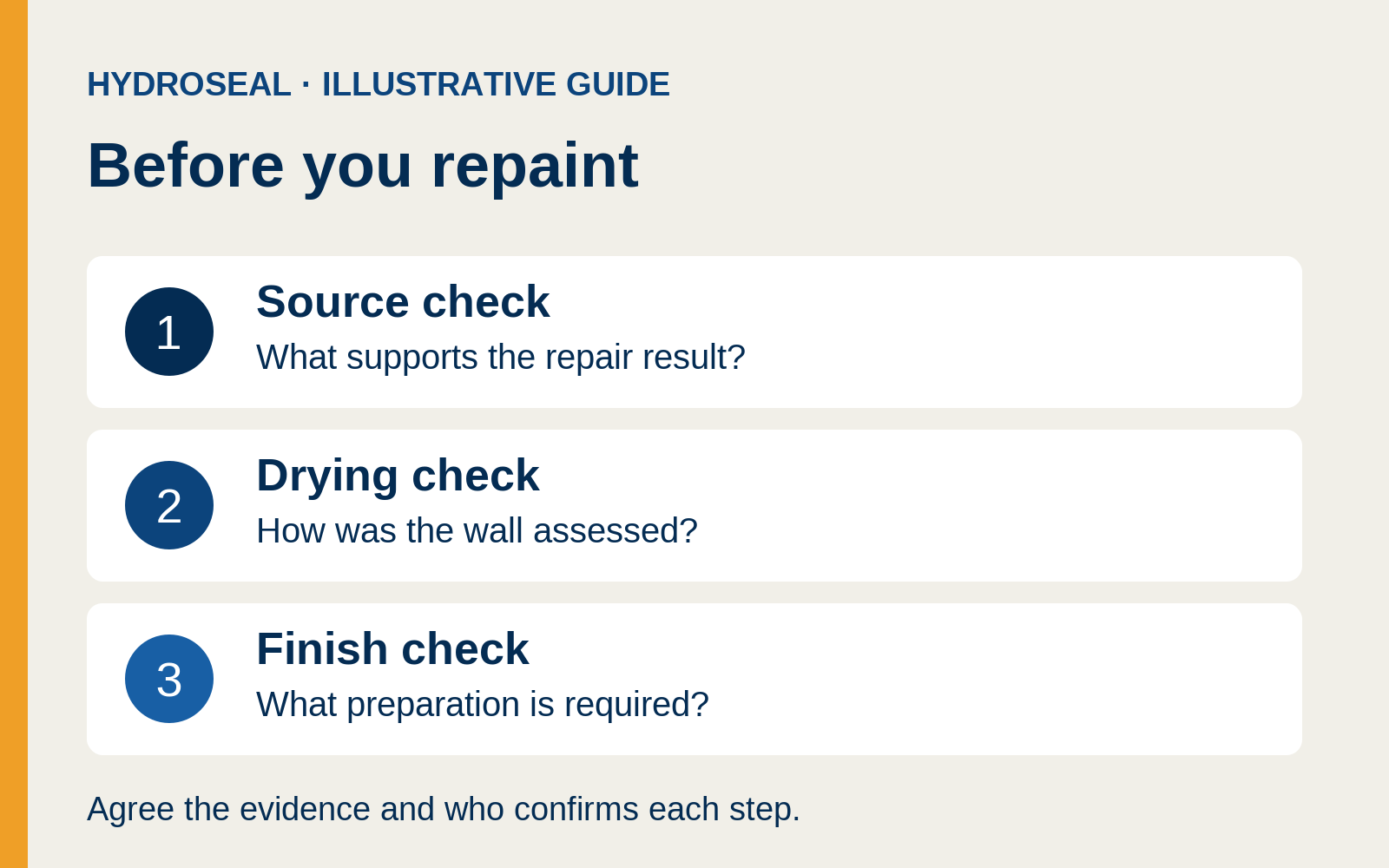
Get a free, no-obligation site inspection
Tell us what’s going wrong and we’ll diagnose the cause, explain your options in plain language, and quote, with no pressure to proceed.
Prefer to talk? Call +65 6289 6811 · We respond within 1 business day.