
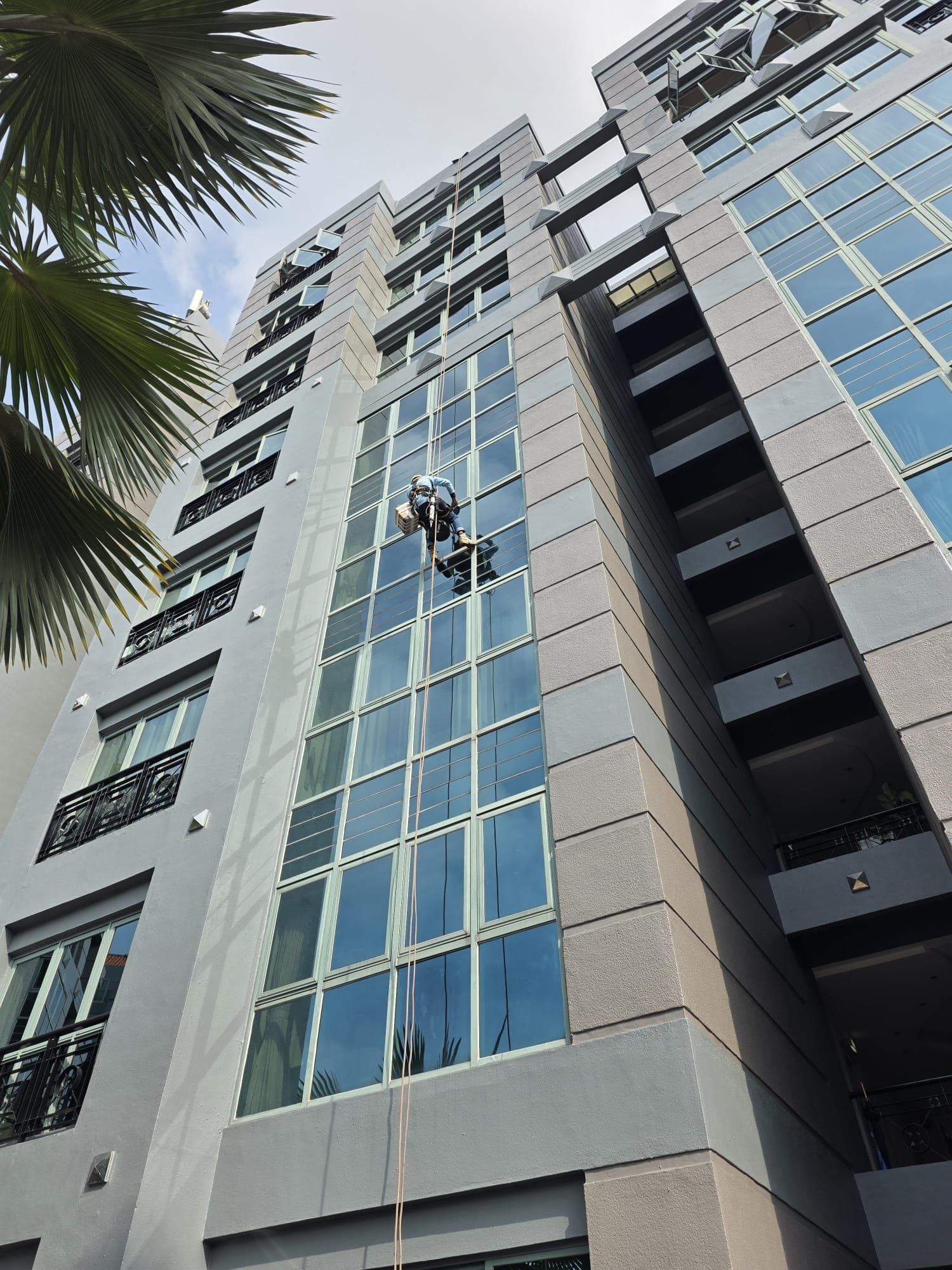
An Overview of Rope Access Works for Singapore Buildings
You spot a stain creeping across a thirtieth-floor ceiling (the kind that can spark a dispute over who is responsible in a condo), or a façade inspection lands on your calendar, and the first instinct is to picture scaffolding swallowing the building for weeks. Then a small team turns up, rigs from the roof, and abseils down to the exact panel that needs attention. The repair is done before lunch, the lobby never closed, and the only sign anyone was there is a clean line of fresh sealant. That is rope access, and on a vertical city like Singapore it has quietly become the default way to reach a building's outside.
Land is expensive here, so buildings grow upward, and the higher they climb the harder their façades are to reach by conventional means. This guide explains what rope access works actually are, what they cover, and why they suit so much of the repair, survey and coating work that keeps a high-rise compliant and watertight.
What rope access works are
Rope access is a method of working at height using ropes and a harness rather than a fixed platform. A trained technician is suspended on two independent ropes, a working line and a backup line, and moves up, down and across a façade to reach the exact spot that needs attention. Every technician carries their own access system, so the building itself does not need to be wrapped or scaffolded.
The method comes straight from the rope techniques used in caving and climbing, refined into a disciplined industrial standard. On most repair, survey, coating and cleaning scopes it can replace scaffolding outright, reaching the same elevations in a fraction of the time and at a fraction of the cost.
What rope access can cover
Rope access is not a single task but a way of getting a skilled worker safely to any point on a building's exterior. From there, the same team can carry out a wide range of work:
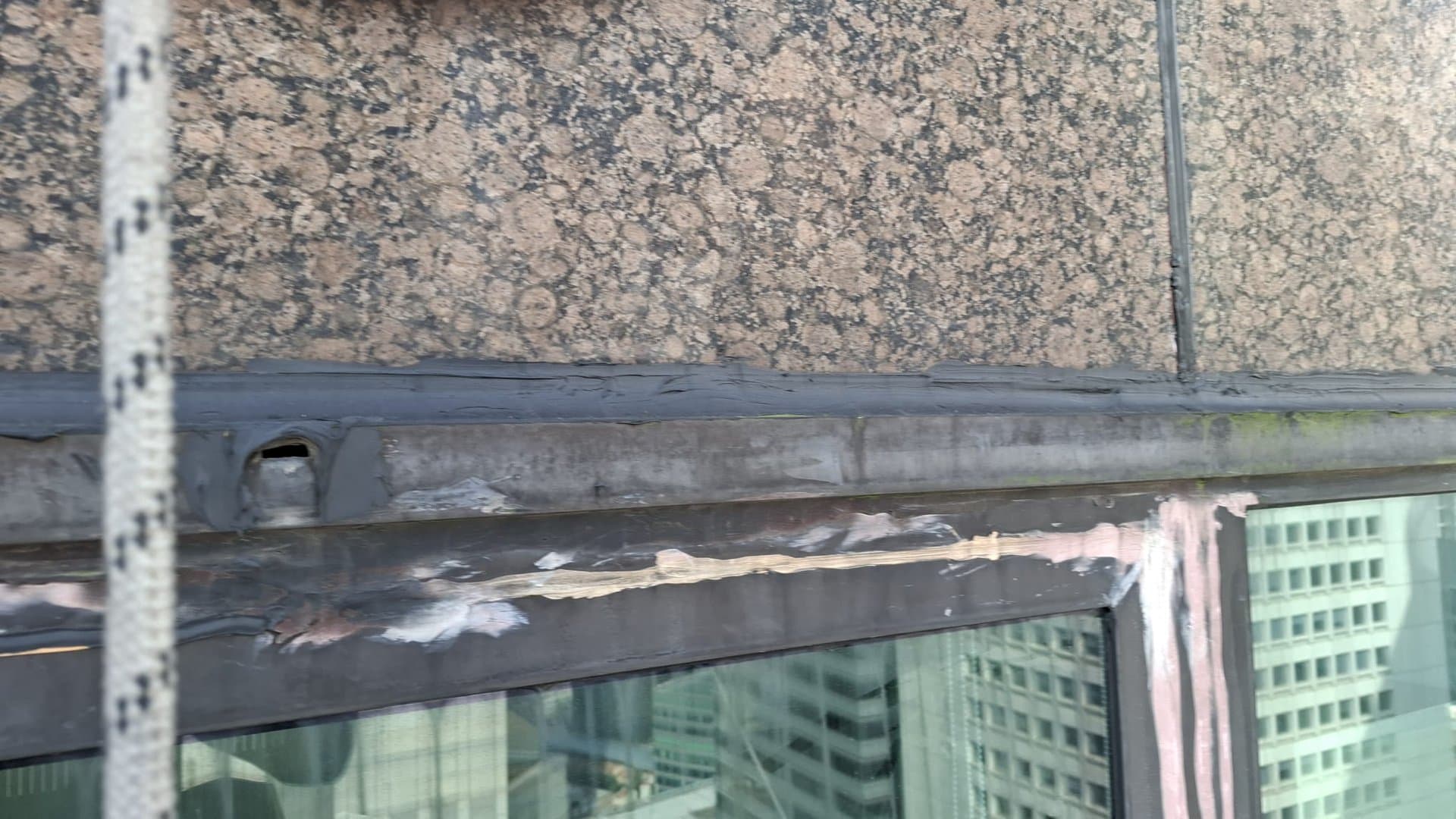
- Sealant application and replacement along façade joints and window perimeters.
- Façade repair and cleaning, from spalled concrete patching to high-rise washing.
- Waterproofing works on external walls, parapets and hard-to-reach junctions.
- High-rise painting and recoating across full elevations.
- Window replacement and glazing support at height.
- Signage installation and repair on towers and podiums.
- Building condition surveys, including close visual inspection for compliance.
Because one team can both inspect and repair, you often close out a defect in a single visit rather than mobilising twice. That matters when a survey turns up something that has to be fixed before a deadline. Much of this scope overlaps with our external wall seepage repair and commercial waterproofing services, simply delivered on ropes instead of from a platform.
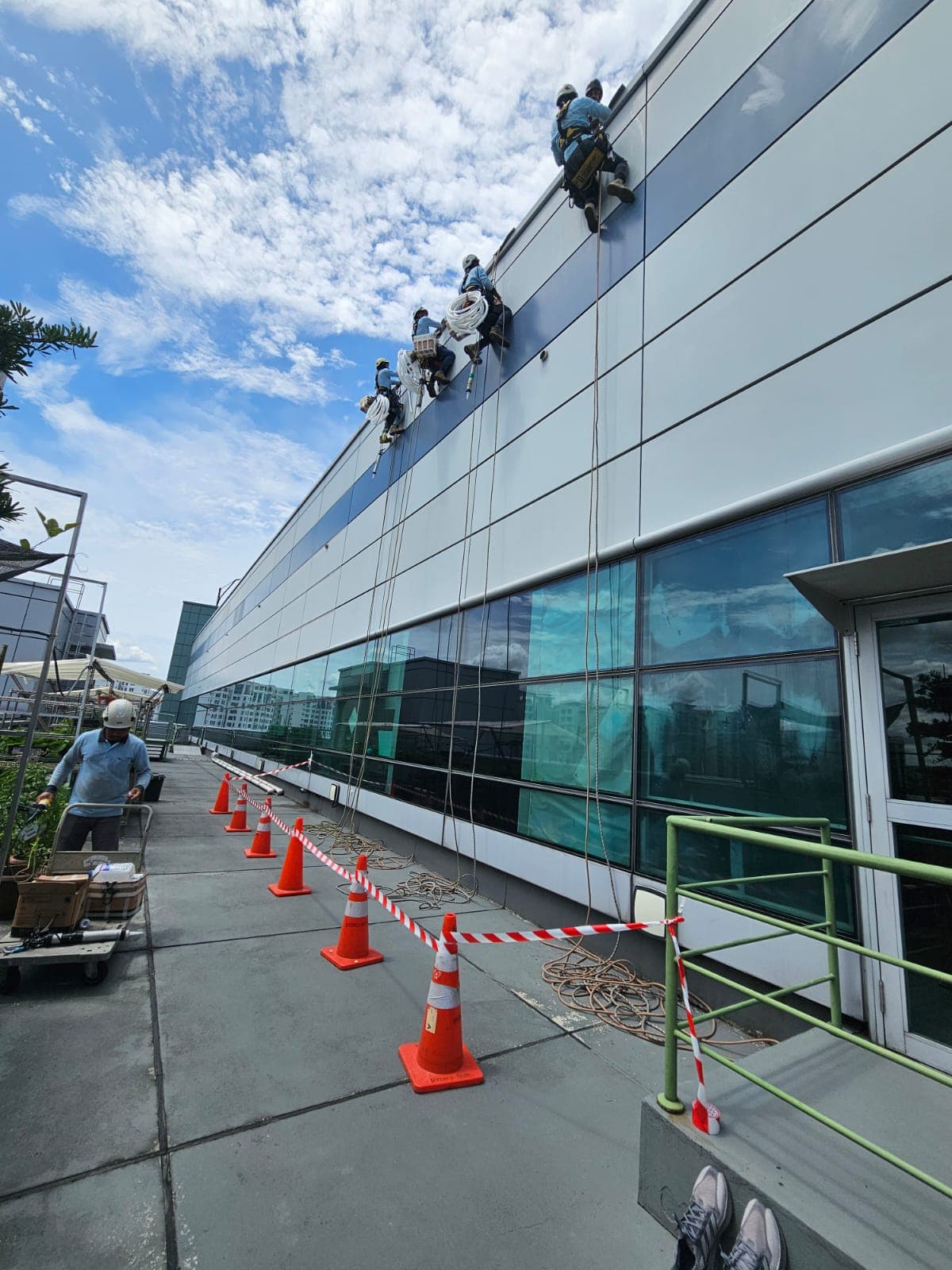 Hydroseal IRATA rope-access technicians working across a commercial building façade in Singapore
Why rope access suits Singapore buildings
A handful of practical advantages explain why rope access has spread so quickly across the island's commercial and residential towers:
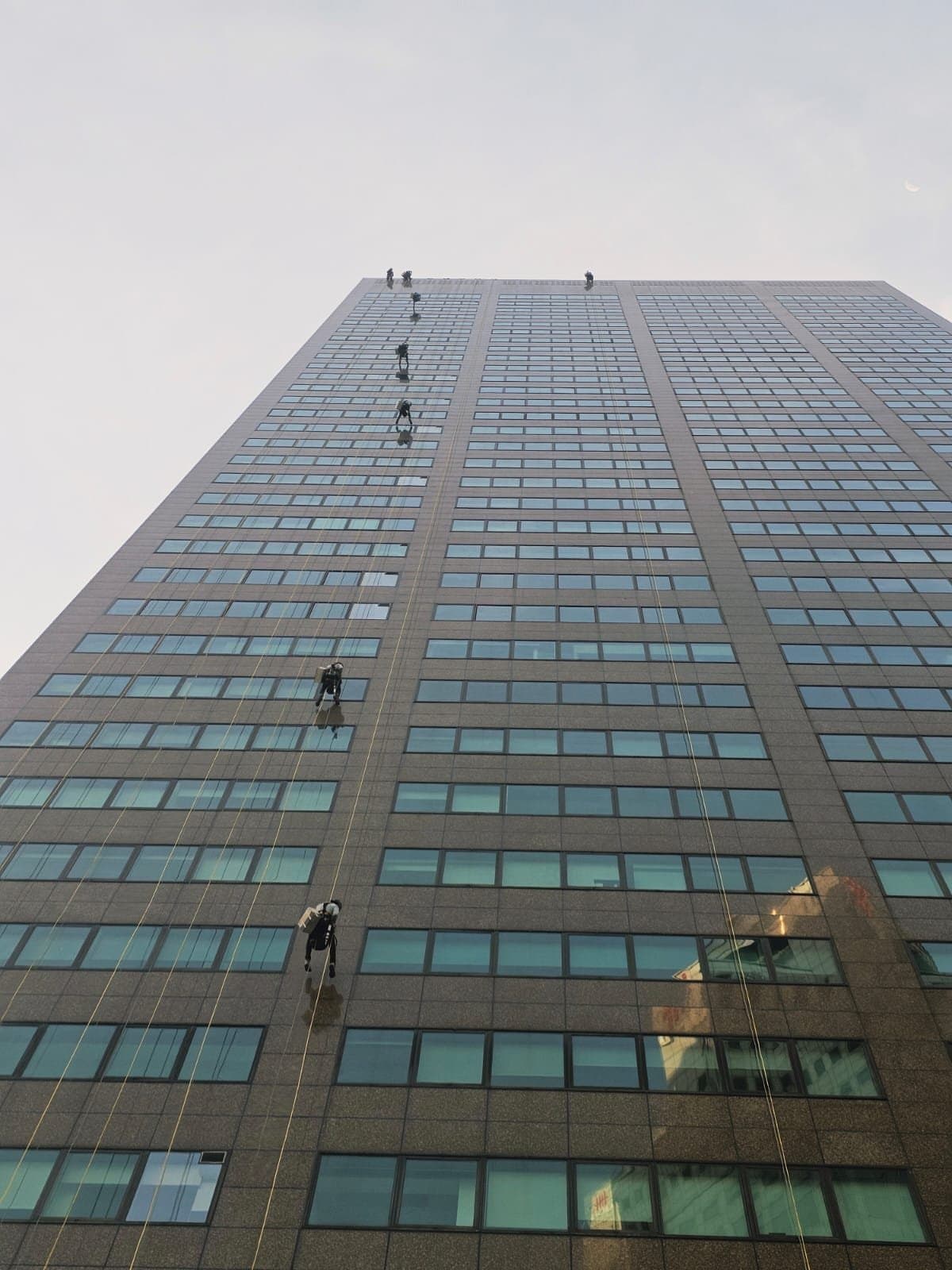
- Reach. A team works from the roof down and can get to any elevation, including setbacks, recesses and over-water faces that platforms and machines cannot serve.
- Speed. There is no structure to design, deliver and erect first, so technicians can often be on the wall within days of approval.
- Cost. You pay for skilled technicians and the work itself, not for weeks of steel rental, which makes it far cheaper than scaffolding for most scopes.
- Minimal disruption. The ground stays clear and entrances stay open, so a live mall keeps trading and offices keep running while the work happens overhead.
- Low noise and footprint. A discreet team on ropes is quieter and less intrusive than a building wrapped in scaffold for the whole period.
For an occupied building running to a tight compliance timeline, those five points usually decide the matter. For a fuller comparison of scope and cost, see our guide on rope access vs scaffolding.
Rope access and façade compliance
Singapore's tall buildings are subject to periodic façade inspection under BCA requirements, and rope access fits that regime neatly. The same team can carry out close visual inspection of a full elevation, document defects at the points that matter, and then return to repair them, all without the cost and lead time of erecting access first.
That continuity, from survey to repair under one method, keeps your defect list moving against the deadline rather than waiting on machinery. For what the inspection regime involves and how it is scheduled, see our overview of BCA façade inspection, and for the technician's-eye view of a working day, how rope access works in Singapore.
Safety, certification and accountability
Working at height is only as good as the discipline behind it. Hydroseal's rope-access teams are IRATA-certified, the recognised international standard for the method, and the company is bizSafe registered, so your risk assessments and safety documentation are in order before anyone leaves the roof. That paperwork protects the building owner as much as it protects the crew.
Common questions
Is rope access legal and regulated in Singapore? Yes. Working at height is governed by the Workplace Safety and Health framework, and reputable contractors run rope-access work to the IRATA system with proper risk assessments and permits in place before any technician leaves the roof.
Is rope access cheaper than scaffolding for façade work? For most repair, survey and coating scopes it is, because you pay for skilled technicians and the work itself rather than weeks of steel rental and erection time. For a fuller breakdown, see our guide on rope access vs scaffolding.
Can rope access fix external wall leaks and seepage? Yes. Technicians can reach the exact joint, crack or sealant line causing the problem and carry out the repair on the spot, which is well suited to high-rise external wall seepage and waterproofing works that platforms struggle to reach.
Does rope access disrupt building tenants? Very little. The ground stays clear and entrances stay open, so a mall keeps trading and offices keep running while the work happens overhead, which is one reason it suits occupied commercial buildings.
We have worked Singapore's façades since 1995, more than 1,000 projects across our 40-plus specialists, and every completed job is backed by a Certificate of Warranty so the work stays accountable long after the ropes come down. If you have a leak, a survey or a coating scope you are sizing up, we are happy to assess it first at no cost. Book a free, no-obligation site inspection on +65 6289 6811 or email enquiry@hydroseal.com.sg.
Unsure about your property’s waterproofing?
Hydroseal offers a free, no-obligation site inspection, honest advice, no pressure.
Get a free quote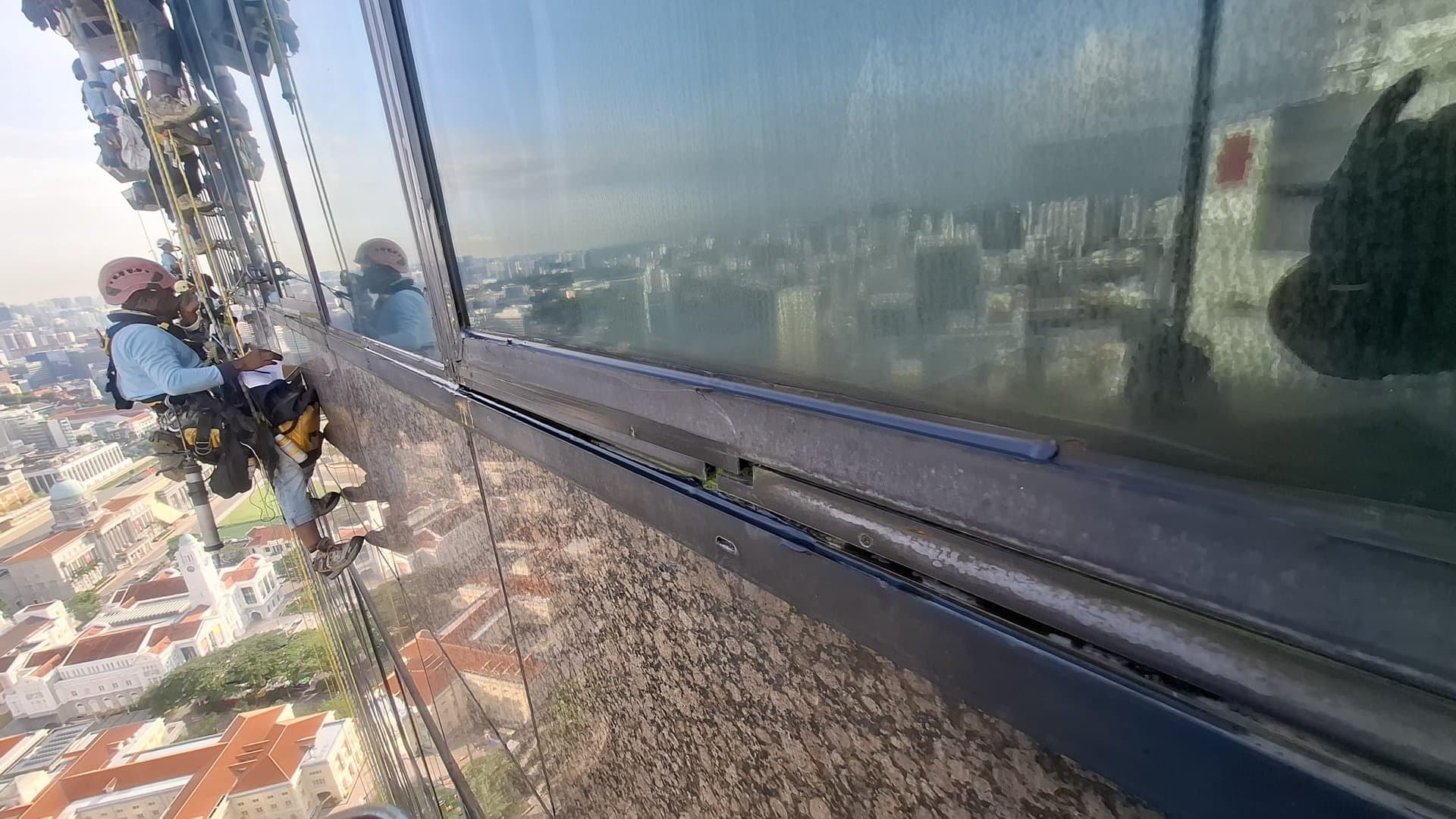
Get a free, no-obligation site inspection
Tell us what’s going wrong and we’ll diagnose the cause, explain your options in plain language, and quote, with no pressure to proceed.
Prefer to talk? Call +65 6289 6811 · We respond within 1 business day.