
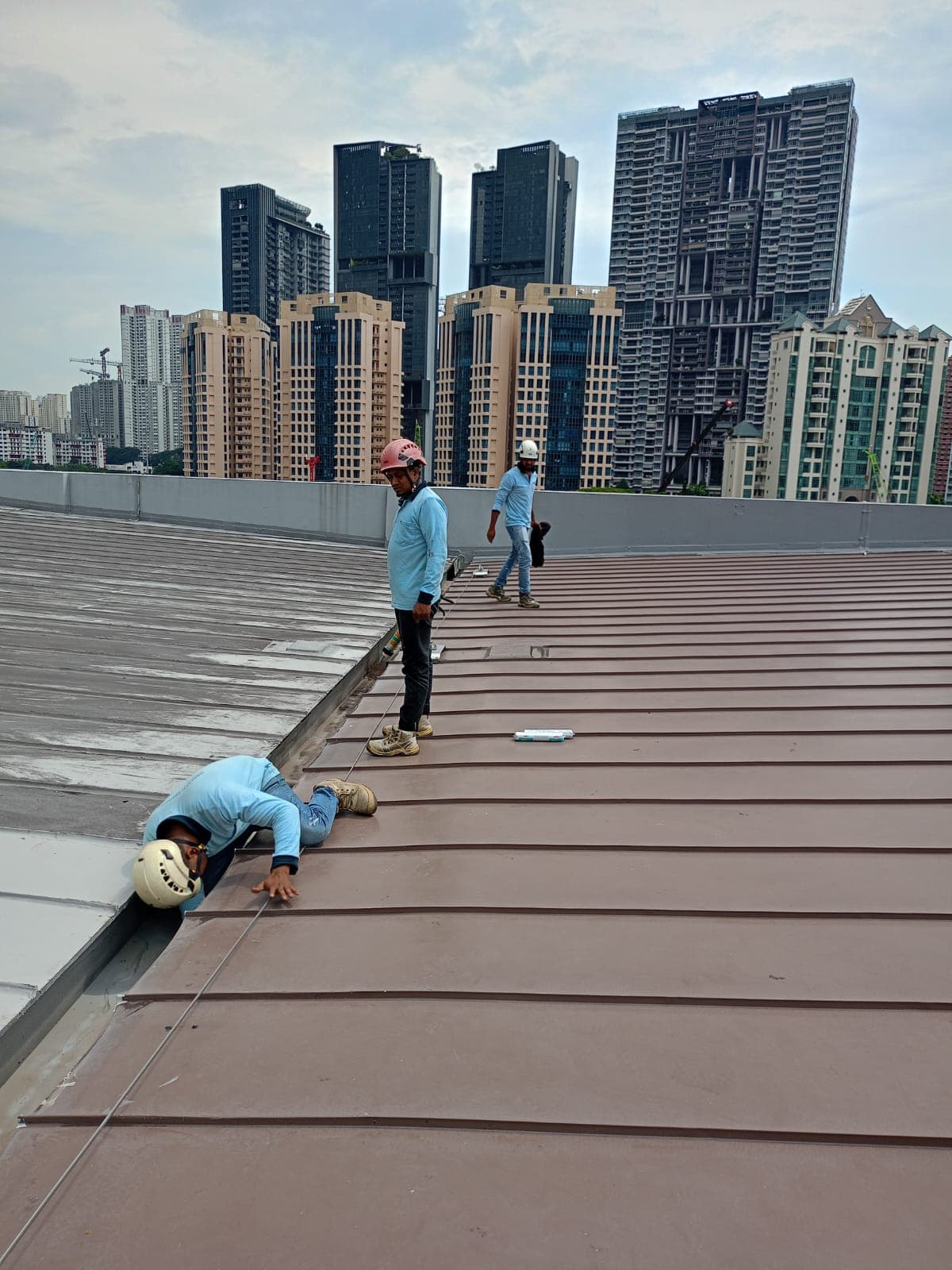
Sheet vs Liquid Waterproofing Membranes: Pros & Cons
When you waterproof a roof or deck in Singapore, the choice often comes down to two membrane families: sheet membranes and liquid membranes. Both keep water out, but they behave differently, and the right pick depends on your surface, its detailing and its exposure. Here is a straight comparison.
Sheet membranes (e.g. torch-on bituminous)
Pre-formed rolls that are bonded down, most commonly heat-welded ("torch-on") to the substrate.
Pros
- Consistent, built-in thickness, reliable protection across large areas
- Very durable and well-proven on RC flat roofs and decks
- Fast to cover big, simple areas
Cons
- Joints and overlaps must be sealed correctly, workmanship at the seams matters
- Harder to detail around lots of pipes, corners and upstands
- Requires hot works during installation
Best for: large, relatively open flat roofs and decks.
Liquid-applied membranes
Coatings rolled or sprayed on that cure into a continuous film.
Pros
- Seamless, no joints, which removes a common failure point
- Excellent around complex details: penetrations, upstands, drains, corners
- Bonds fully to the substrate and follows its shape
Cons
- Thickness depends on correct application, more reliant on a skilled applicator
- Surface must be properly prepared and dry
- May need several coats to build the required film thickness
Best for: roofs and decks with many penetrations and details, balconies, and complex shapes.
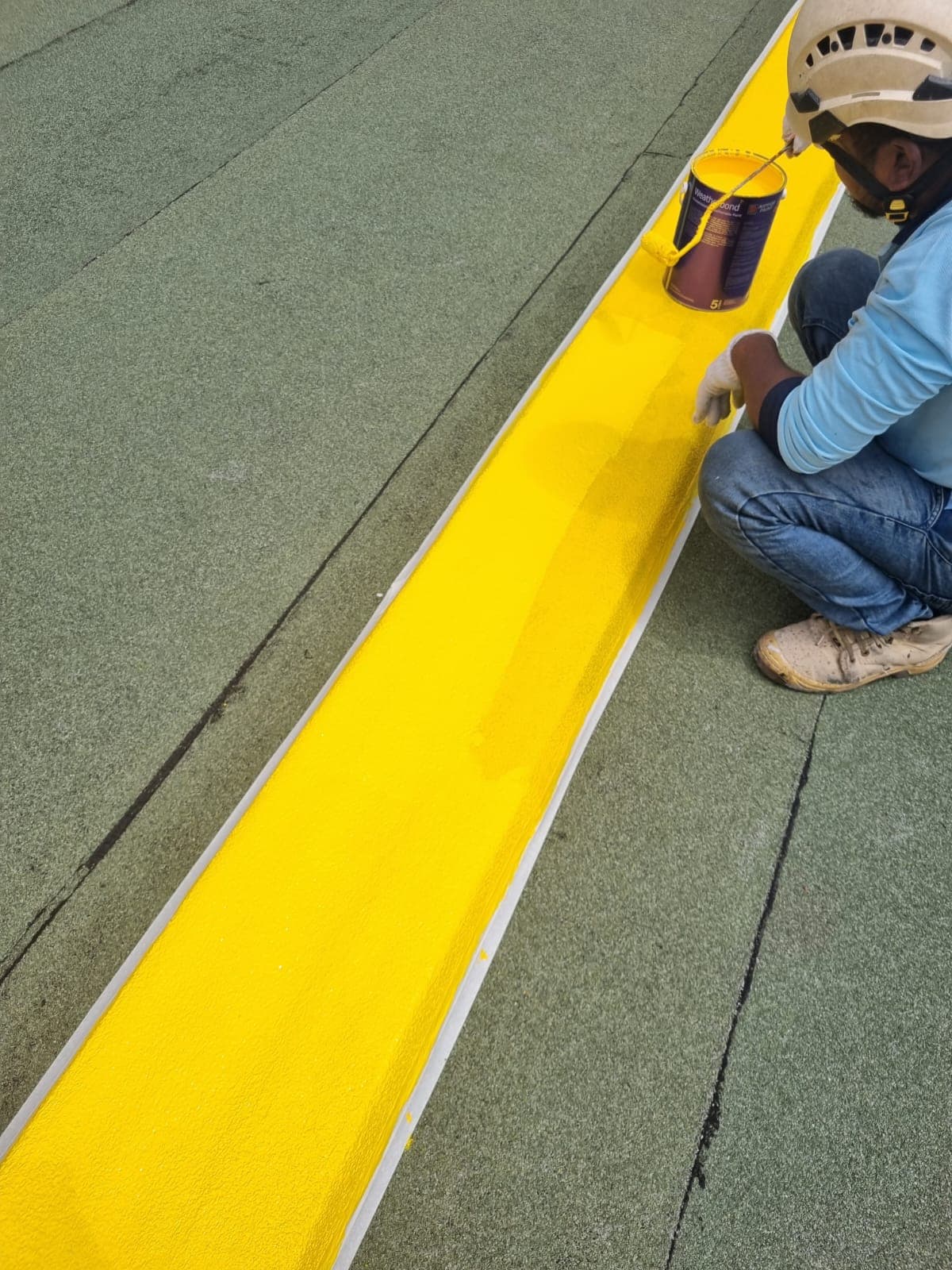 A liquid waterproofing membrane being applied on a roof in Singapore
Which is better for Singapore?
Neither is universally "better." Singapore's intense UV and monsoon rain are demanding on any membrane, so the deciding factors are the surface, the detailing and the quality of installation. Large simple roofs often suit sheet membranes; detail-heavy areas often suit liquid. Many projects use a combination, for example a sheet membrane on the main field with liquid around the tricky details. Sheet and liquid are two of several systems in use locally; our overview of common waterproofing materials in Singapore covers the rest.
The most important variable, whichever you choose, is preparation and workmanship. A premium membrane applied over a damp or dirty surface will still fail.
How membrane choice changes by area of the building
The membrane that suits a roof is rarely the same one that suits a wet area or a wall, so it helps to think area by area rather than picking one product for the whole building.
On RC flat roofs and decks, exposure to UV and ponding water is the main concern, which is why robust sheet systems or UV-stable liquid coatings are common in our roof waterproofing and repair work. Inside bathrooms and kitchens, where the membrane sits under tiles and has to wrap tightly around floor traps, pipe penetrations and the kerb, a seamless liquid system usually performs best, and this is the approach we favour for bathroom waterproofing in Singapore. Balconies fall somewhere in between, with a tiled finish but full weather exposure, so detailing at the threshold and drainage outlet matters as much as the membrane itself, as we cover in our balcony waterproofing service.
External walls are a different problem again. There the issue is often water tracking through hairline cracks and failed joints rather than a flat surface holding water, so coatings and crack treatment matter more than sheet membranes. If you are dealing with damp patches spreading on an internal wall, our guides on external wall seepage repair and how to spot water damage in your home explain what to look for before it worsens.
Membrane choice when there is already a leak
Selecting a membrane is straightforward on new or fully exposed surfaces. It becomes harder when water is already coming through a finished ceiling or a tiled floor, because the source is hidden and the existing finishes are in the way.
In an occupied condo or commercial unit, hacking up an entire floor to relay a fresh membrane is not always practical, so the decision often weighs a full re-membrane against a more targeted repair. Our overview of hacking versus non-hacking waterproofing explains that trade-off, and where the leak is driven by water under pressure through a slab or construction joint, PU grouting can seal the path without removing the finishes above. If the leak shows up on a ceiling shared between two parties, the question of who pays often comes before the question of which membrane to use, which is why our note on a condo ceiling leak and who is responsible in Singapore is worth reading alongside the technical choice. For early warning signs above a wet area, 4 signs of bathroom water damage is a useful checklist.
Common questions
Which waterproofing membrane lasts longest in Singapore? Longevity depends far more on installation and surface preparation than on the membrane family. A correctly installed sheet or liquid system over a clean, dry, properly primed substrate will outlast a premium membrane laid over a damp or contaminated surface, and Singapore's UV and monsoon rain are demanding on both.
Can sheet and liquid membranes be used together on the same roof? Yes. A common approach on Singapore roofs is a sheet membrane across the main open field with a liquid-applied membrane around penetrations, upstands, drains and corners, combining the speed of sheet over large areas with the seamless detailing of liquid.
Do I need to hack up tiles to replace a bathroom membrane? Not always. Where the membrane has genuinely failed, hacking and relaying is the durable fix, but in some cases a non-hacking treatment or PU grouting can address the leak without removing finishes. A site inspection is the only reliable way to tell which applies.
Is liquid membrane better for balconies and areas with many pipes? Generally yes. Liquid-applied membranes cure into a continuous film with no joints, so they handle penetrations, upstands and irregular shapes better than sheet membranes, which need carefully sealed overlaps around each detail.
If you are unsure which system your roof needs, Hydroseal provides a free site inspection and will specify the membrane, and the preparation, that suits your building, with a Certificate of Warranty on the completed work.
Unsure about your property’s waterproofing?
Hydroseal offers a free, no-obligation site inspection, honest advice, no pressure.
Get a free quote
Get a free, no-obligation site inspection
Tell us what’s going wrong and we’ll diagnose the cause, explain your options in plain language, and quote, with no pressure to proceed.
Prefer to talk? Call +65 6289 6811 · We respond within 1 business day.