
Why Waterproofing Is Essential for Commercial Buildings
A faint brown ring appears on a ceiling tile near a tenant's meeting room. It looks minor, so it waits. A few weeks of afternoon storms later, the ring has spread, the tile is sagging, and a tenant is asking why their newly fitted office smells damp. By the time water shows on the inside of a commercial building, it has usually been travelling through the structure for a while, and the cheap fix is already behind you.
Waterproofing rarely makes a facility manager's priority list until something leaks. Yet in Singapore's climate it is one of the few investments that quietly protects the building fabric, the indoor environment, the running costs and your compliance position all at once. This guide sets out why it matters for commercial property, and what good waterproofing actually buys you.
What water intrusion really costs
Water damage is rarely confined to the spot where it shows. Once moisture gets into the building envelope it tracks along slabs and walls, so the visible stain is often far from the actual entry point. Chasing that path after the fact is slow and expensive, and it usually means disturbing finishes, ceilings and tenanted space to get at the source.
Left unaddressed, persistent damp degrades the materials that hold a building together. Plaster softens, concrete and reinforcement suffer, finishes lift, and the humid local climate accelerates mould growth that affects both the building and the people working in it. The repair bill for a structure that has been quietly wetting for a year dwarfs the cost of sealing it properly in the first place. It also helps to recognise trouble early, so it is worth knowing how to spot water damage in your building before a stain becomes a structural problem. Where a leak shows up in a unit below, the question of who is responsible for a ceiling leak can also turn on whether the source sits in common property or private space, which matters for any MCST-managed commercial or mixed-use building.
Protecting the building structure
The first job of waterproofing is to keep the structure dry so it lasts. A sound membrane on the roof, parapets and external walls stops rainwater from reaching the slab and reinforcement underneath, which is where the costly, slow-to-repair damage accumulates.
Keeping water out preserves the design life of the roof and façade rather than letting the weather shorten it. On a commercial asset where re-roofing or major concrete repair runs into serious money and disruption, protecting the envelope is simply cheaper than rebuilding it.
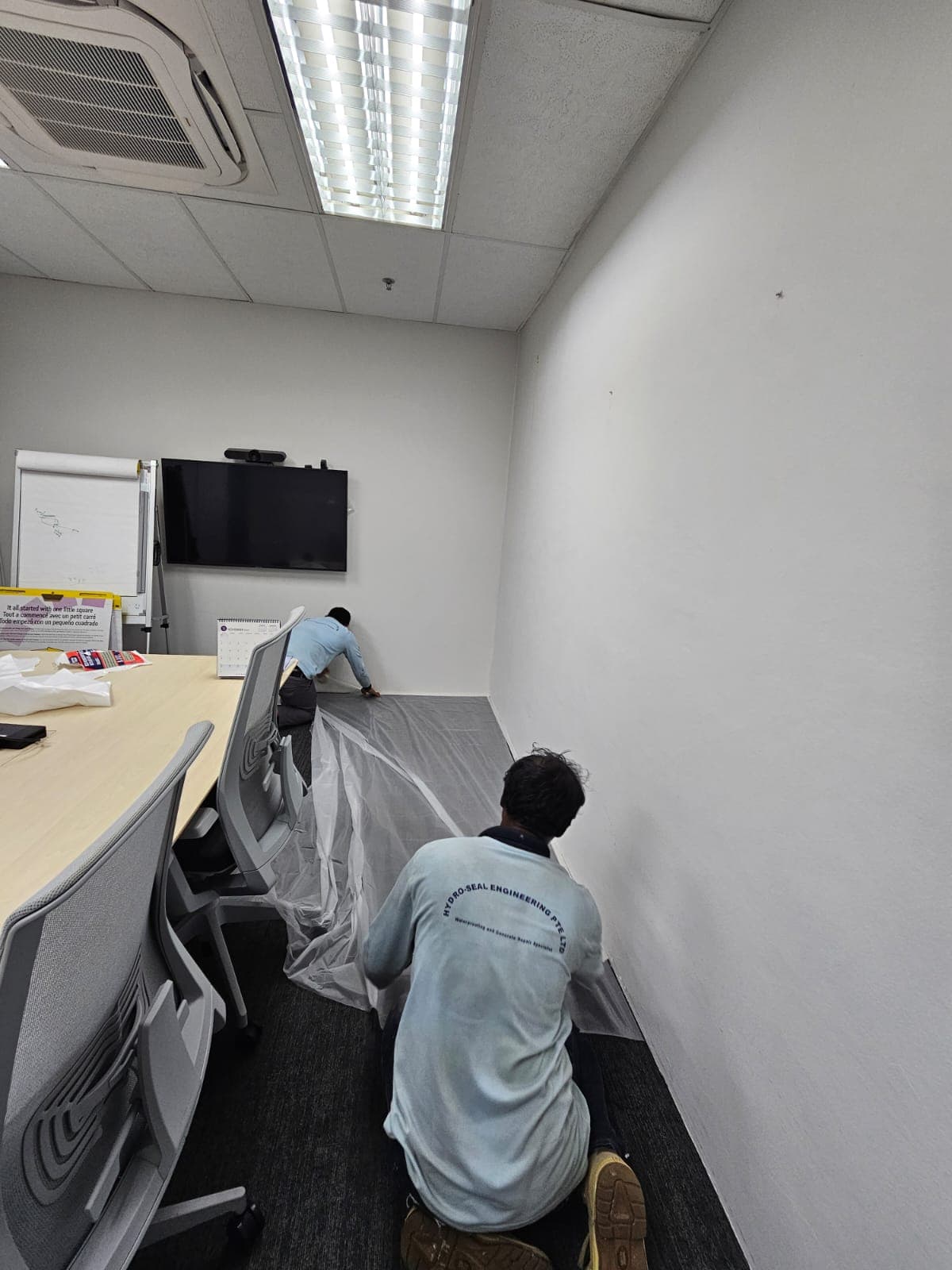
Hydroseal specialist applying waterproofing to a commercial office wall in Singapore
Healthier air and a better tenant environment
Water that gets trapped inside walls, ceilings and floor build-ups does not just damage materials, it changes the air people breathe. Damp pockets feed mould, and mould releases spores that can irritate the respiratory systems of staff and visitors in an enclosed, air-conditioned space.
For a commercial landlord, that is a tenant-experience and reputation issue as much as a maintenance one. A building that stays dry stays comfortable, holds its value, and keeps tenants from logging the kind of complaints that make a lease harder to renew.
Energy and cost savings
Good waterproofing also touches the energy bill, which surprises some owners. Many roof systems carry reflective coatings that bounce heat away rather than letting it soak into the building, which eases the load on air-conditioning across a large floor plate.
The savings stack up over time:
- Lower cooling load, as a reflective, intact roof reduces heat gain through the top of the building.
- Fewer reactive repairs, because a planned membrane prevents the emergency call-outs that always cost more.
- Longer asset life, spreading the value of the building fabric over more years before major works are due.
On a large commercial footprint those effects are not trivial. A well-specified, well-maintained system pays for itself through what it prevents.
BCA compliance and your obligations
Commercial waterproofing is not only about protecting the building, it is part of keeping it compliant. Singapore's Building and Construction Authority sets requirements around building safety and condition, and the external envelope, façade and roof included, sits squarely within what owners are responsible for maintaining.
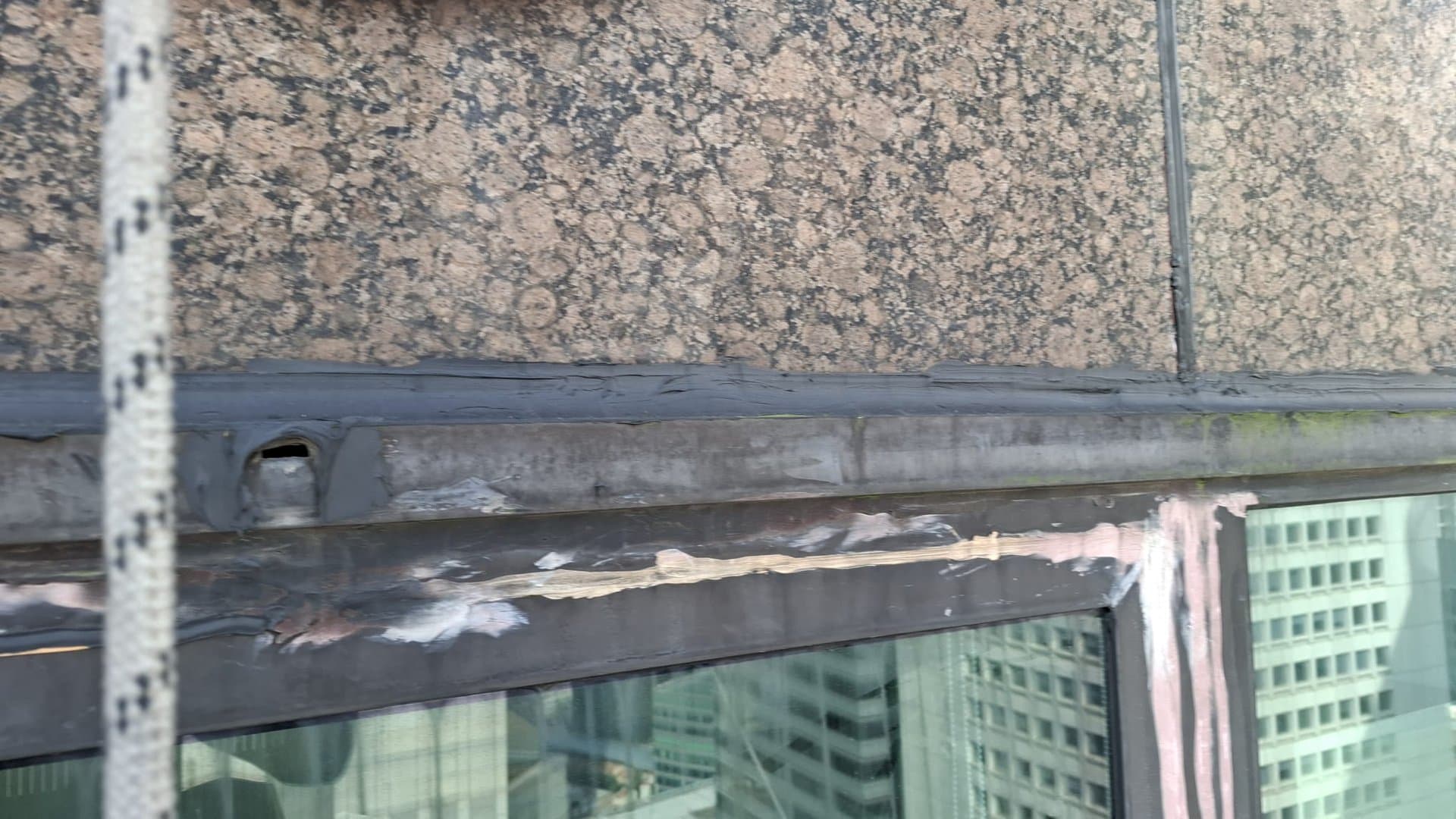
Periodic façade inspection is part of that regime for taller buildings, and defects flagged during inspection have to be put right within set timelines. Sound waterproofing, documented and warranted, keeps you ahead of those obligations rather than scrambling against a deadline. For what the inspection process involves, see our overview of BCA façade inspection.
Choosing the right system and contractor
There is no single waterproofing product that suits every surface. Roofs, basements, planters, wet areas and façades each call for a different approach, from cementitious coatings and liquid membranes to bituminous and polyurethane systems, matched to the substrate and the exposure. If you want to understand the trade-offs, our guide to sheet versus liquid waterproofing membranes sets out where each performs best. Persistent external damp is often handled with external wall seepage repair, while cracked or delaminating slabs may need concrete repair and waterproofing. Getting that specification right is where a commercial job is won or lost, which is also why it pays to know how to choose a waterproofing contractor in Singapore.
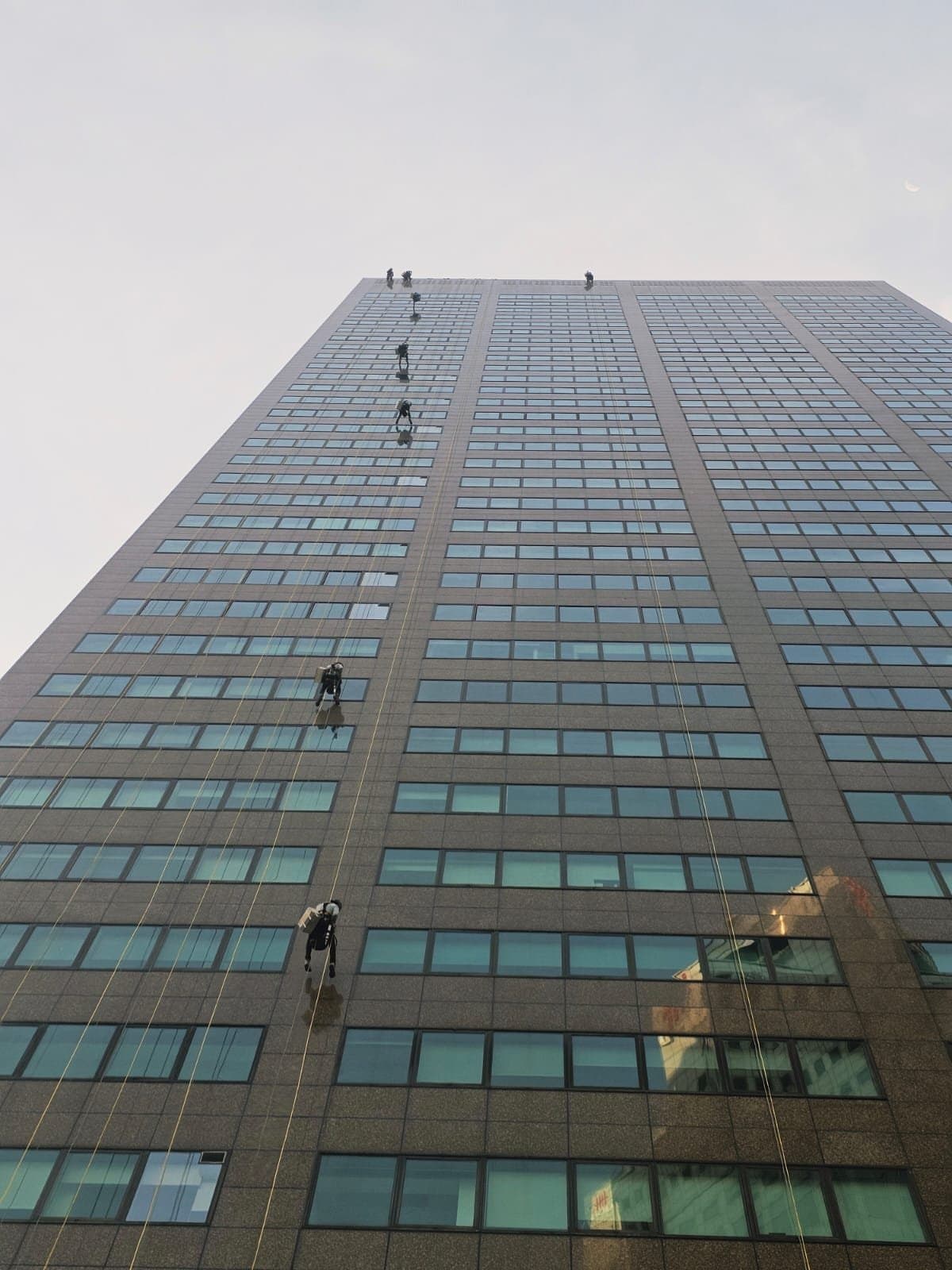
Just as important is reaching the work without shutting the building down. On a high-rise, much of the external waterproofing and repair can be carried out by IRATA-certified rope-access teams working from the roof down, which keeps the ground clear and tenants undisturbed while the work happens overhead. You can see the full scope on our commercial waterproofing page.
Common questions
How often should a commercial building be waterproofed in Singapore? There is no fixed interval, but most owners review the roof and external envelope as part of routine maintenance and re-coat or repair when a membrane nears the end of its service life or starts to show defects. In practice, periodic inspections (and the BCA façade inspection regime for taller buildings) tend to drive the timing.
Is waterproofing a landlord or a tenant responsibility? The building envelope, the roof, external walls and common areas, normally sits with the owner or the MCST managing the development, while a tenant typically maintains only their own fit-out. Where a building is strata-titled, responsibility usually follows the line between common property and private lots, so it is worth checking the lease and the by-laws.
Can waterproofing be done without disrupting tenants? Often, yes. On a high-rise, much of the external work can be carried out by IRATA-certified rope-access teams working from the roof down, which keeps the ground level clear and lets tenants carry on with minimal interruption.
Does waterproofing help with BCA compliance? Indirectly, yes. A dry, well-maintained envelope reduces the spalling, cracking and façade defects that inspections flag, so sound waterproofing makes it easier to stay ahead of the maintenance obligations owners carry under the BCA regime.
Hydroseal has protected Singapore's buildings since 1995, more than 1,000 projects across our 40-plus specialists, and every completed job is backed by a Certificate of Warranty of one to ten years so the work stays accountable. If a stain, a tired roof or an upcoming inspection has you thinking ahead, we are happy to assess it first at no cost. Book a free, no-obligation site inspection on +65 6289 6811 or email enquiry@hydroseal.com.sg.
Unsure about your property’s waterproofing?
Hydroseal offers a free, no-obligation site inspection, honest advice, no pressure.
Get a free quote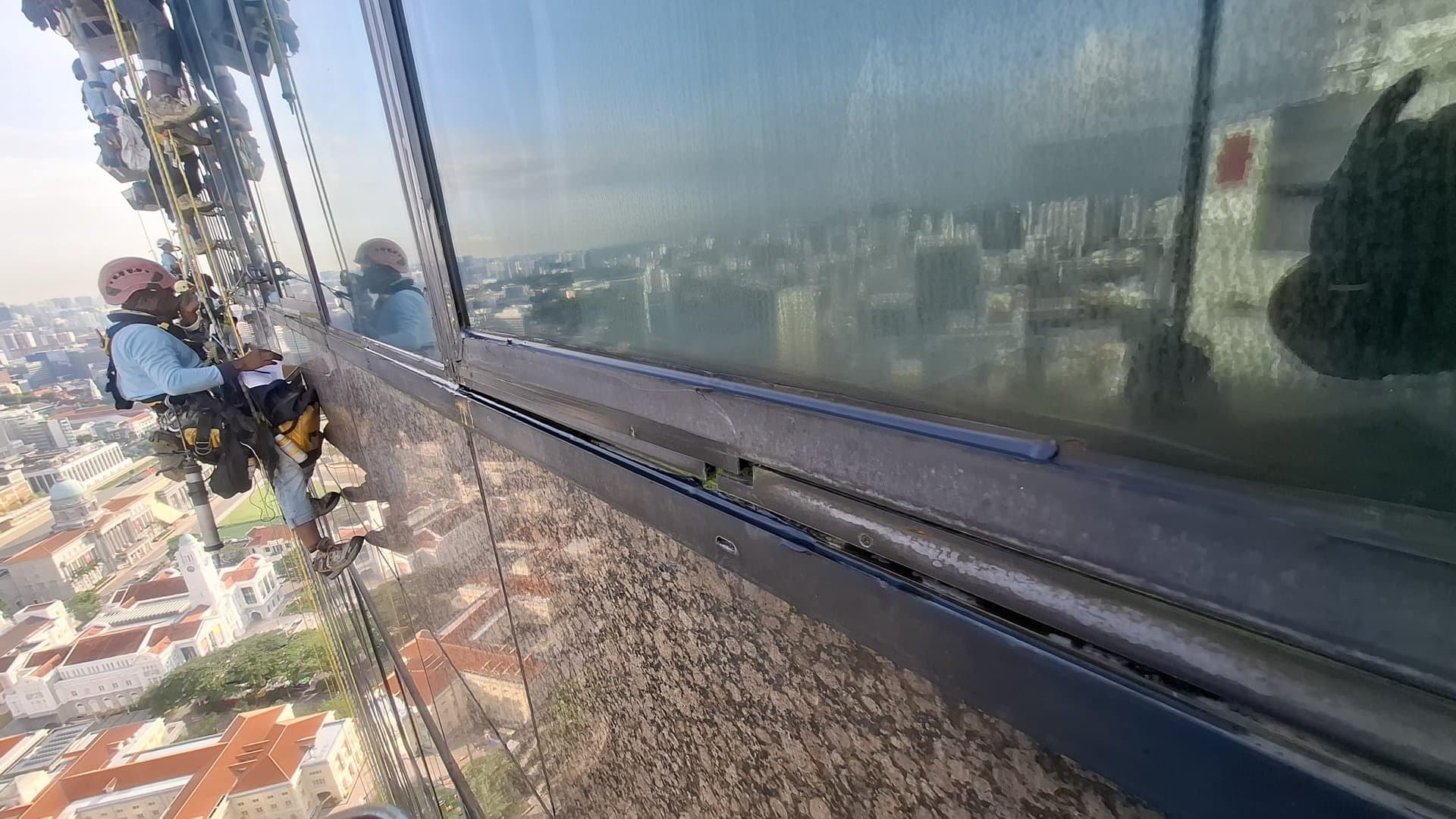
Get a free, no-obligation site inspection
Tell us what’s going wrong and we’ll diagnose the cause, explain your options in plain language, and quote, with no pressure to proceed.
Prefer to talk? Call +65 6289 6811 · We respond within 1 business day.