
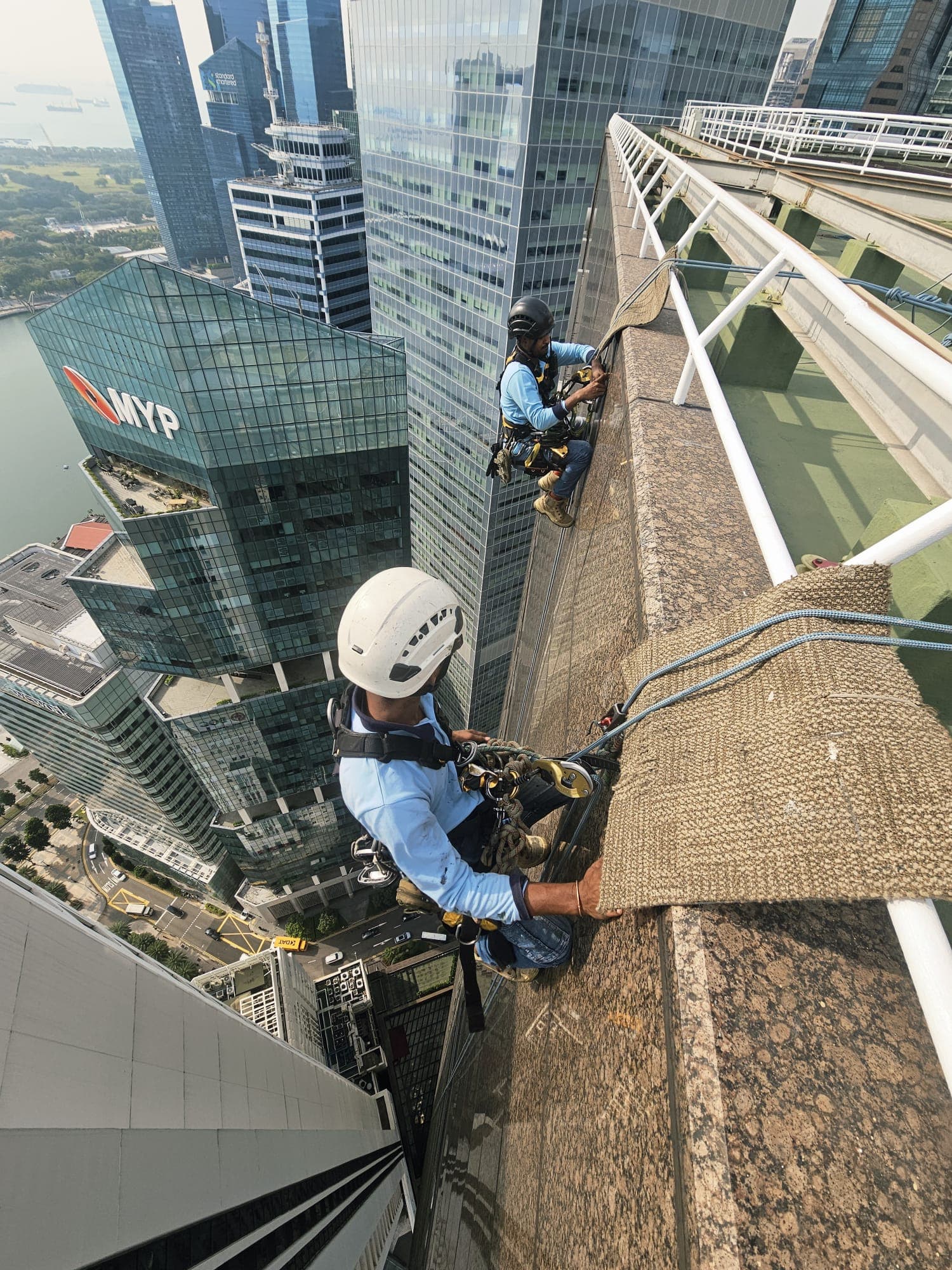
BCA Façade Inspection in Singapore: What to Expect
A notice has landed on your desk, or a managing agent has flagged it at the last MCST meeting: your building may be due for a façade inspection. Now you need to know what that actually involves, what it costs you in tenant disruption, and what you have to file. This guide walks building and facility managers through the essentials.
In short, BCA façade inspection is a periodic safety check on the exterior of qualifying buildings in Singapore, carried out by a competent person and documented in a formal condition report. Whether your specific building is due, and on what cycle, depends on its age, height and use. Always confirm your exact obligation directly with the Building and Construction Authority.
What the periodic façade inspection regime is
Façade inspection in Singapore sits within the BCA's Periodic Inspection of Buildings (PIB) framework, alongside the Periodic Façade Inspection requirements. The purpose is straightforward: keep the public safe from falling masonry, loose cladding and other façade defects. Over decades, concrete spalls, tiles debond and sealants fail, and a structured inspection catches these before they become hazards.
For applicable private buildings, this is typically a recurring cycle, commonly cited as every five years once a building reaches the qualifying age. The exact applicability and interval depend on your building's profile, so treat any general figure as a starting point and verify the specifics with BCA.
Does my building need one?
This is the first question most managers ask, and the honest answer is that it depends on three things: the building's age, its height, and its use. Older and taller commercial buildings are the most likely to fall within scope. A newer low-rise property may not yet be due.
Rather than guess, the safest path is to confirm your building's status and timeline with BCA, who hold the definitive applicability rules. If you do fall within scope, you will generally need to appoint a competent person to oversee the inspection and engage a contractor to carry out the close-up survey. Planning early gives you room to schedule the work before any deadline, instead of scrambling near it.
What actually gets inspected
A façade survey is a close, methodical look at every elevation of the building, not a glance from the ground. A competent inspector and the survey team document the condition of the external envelope and flag defects that need attention. The common items checked include:
- Spalling concrete, where the surface breaks away and exposes reinforcement
- Cracks in the structure, render or finishes
- Hollow, debonded or loose tiles and cladding panels
- Efflorescence, the white staining that signals moisture movement
- Corrosion of fixings, brackets and embedded metal
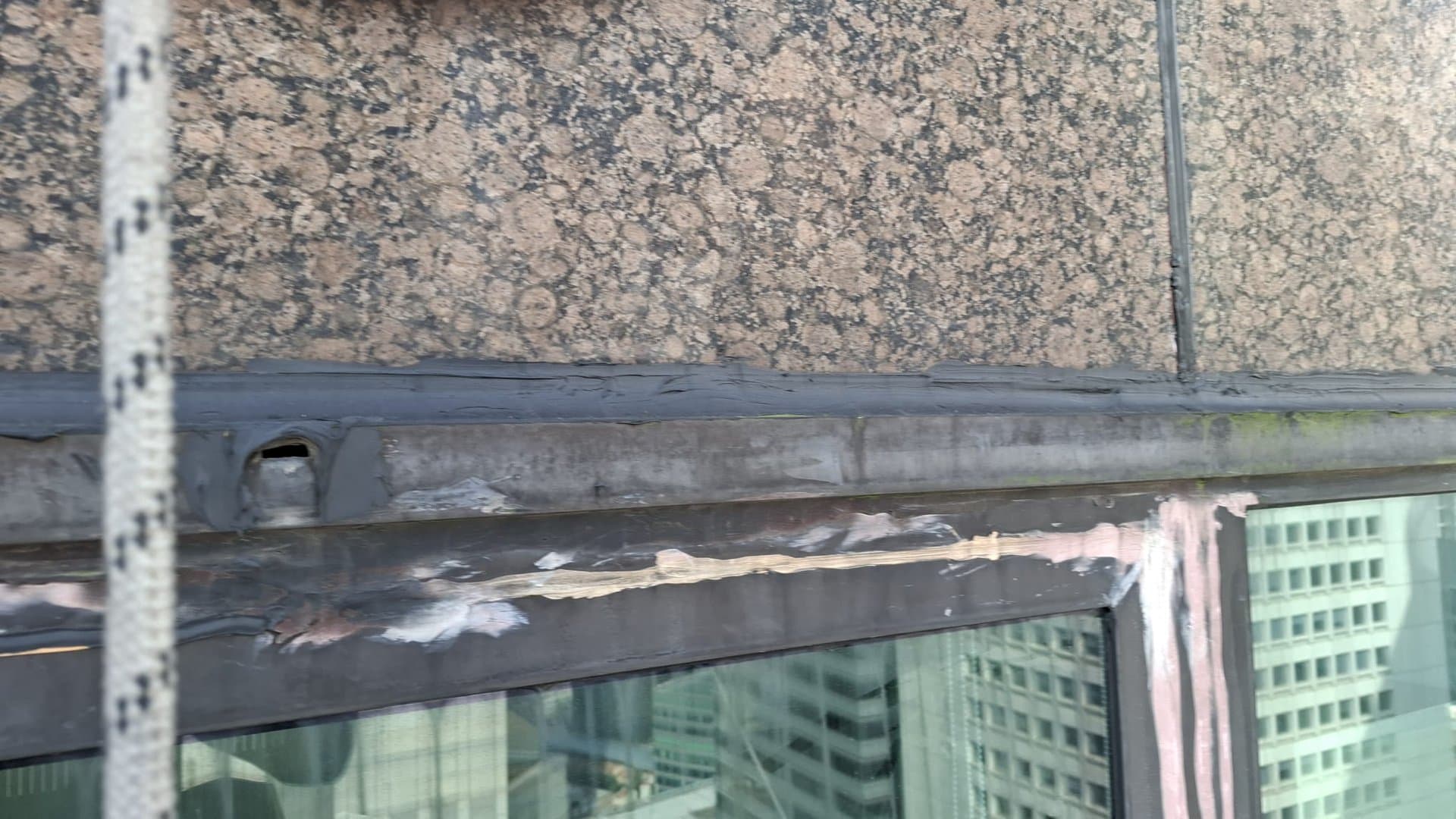
- The condition of sealant joints and waterproofing membranes
Where defects are found, they often point to follow-up work such as concrete repair, sealant replacement or wider commercial waterproofing. If you are unsure why surfaces flake and break away, our explainer on what spalling concrete is sets out the causes. Catching these issues at survey stage lets you plan rectification properly rather than reactively.
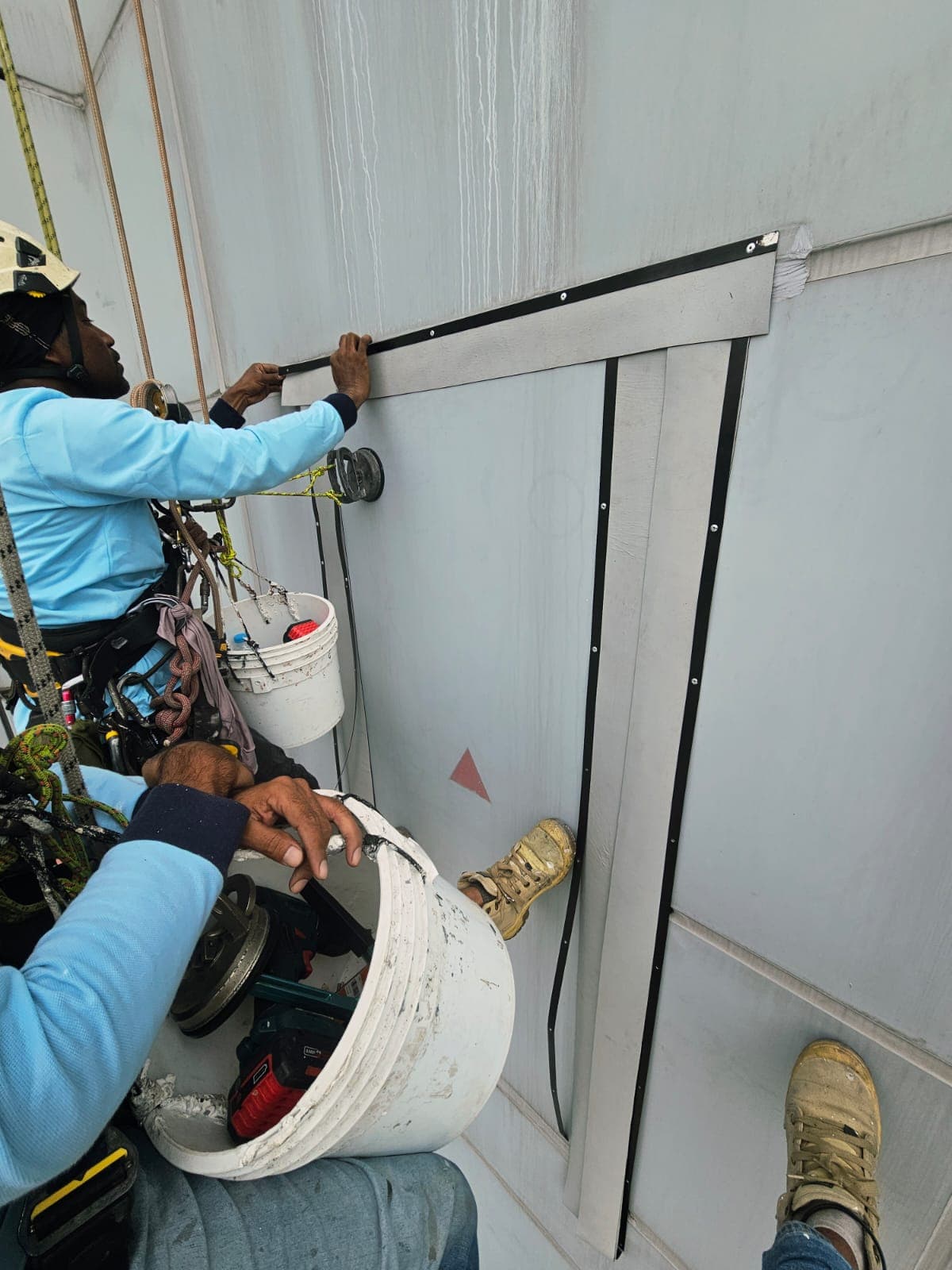 Close-up façade condition survey by rope access in Singapore
Why rope access is the survey method of choice
To inspect a façade properly, someone has to get within arm's reach of it, across the whole building. Industrial rope access is the gold-standard method for this, because it reaches awkward elevations, recesses and full heights that are otherwise hard to survey. Hydroseal's IRATA-certified technicians can examine, photograph and tap-test surfaces directly, producing a far more reliable assessment than a distance view.
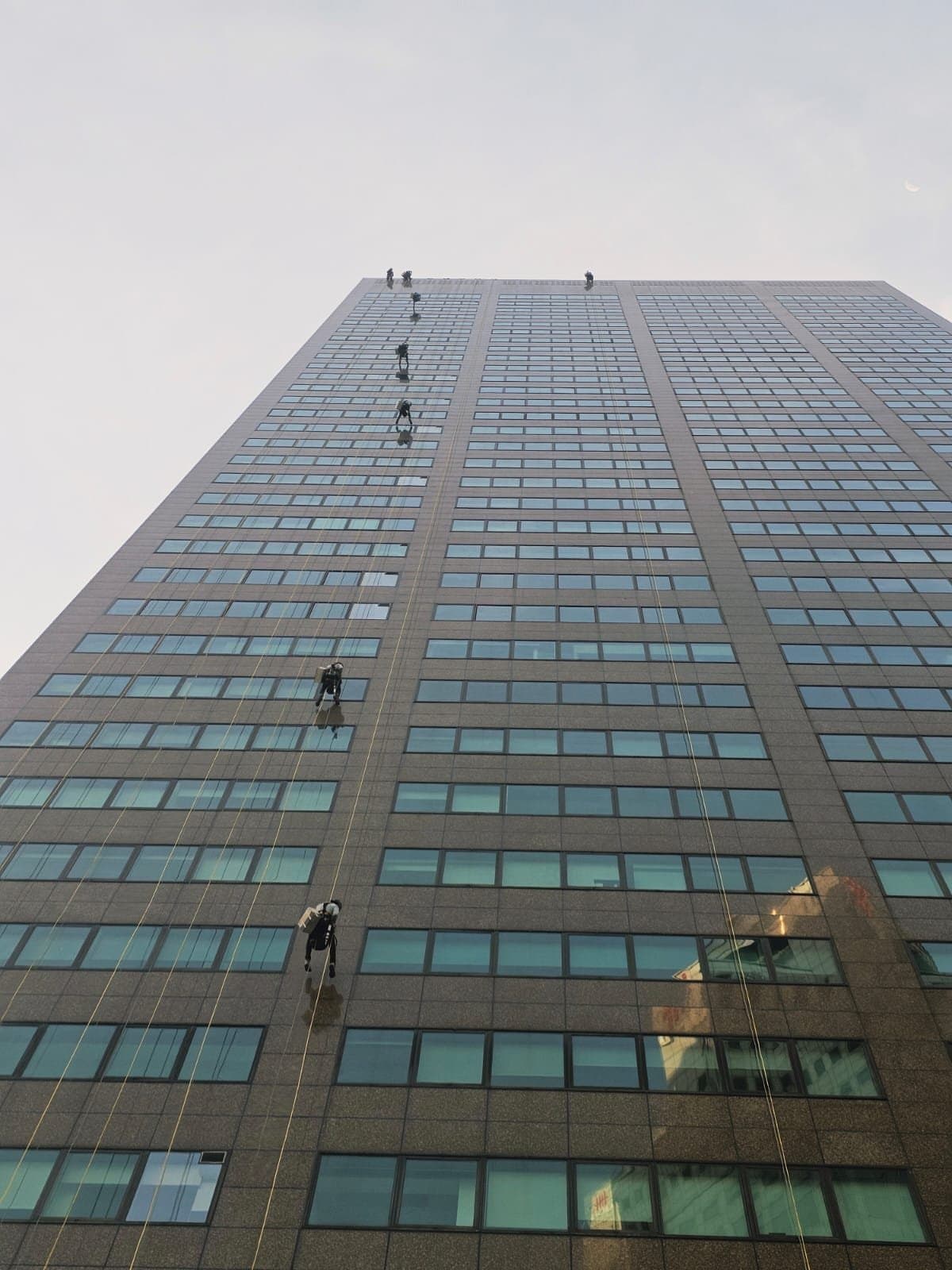
It is also the least disruptive option for a working building. There is no scaffolding to erect, no hoarding around your entrances, and minimal interference with tenants and pedestrians below. For a fuller comparison of the two approaches, see our note on rope access vs scaffolding. You can read more about how we deliver rope access works safely across Singapore high-rises.
What you receive: the report
The core deliverable is a detailed façade condition report, supported by photographic evidence of the building's exterior. It records the defects found, their locations and their severity, in a format suitable for your building records and for compliance filing. This is the document that demonstrates the inspection was carried out and gives you a clear basis for planning any repairs.
For a building manager, that report does real work. It supports your records, informs your maintenance budget, and gives the MCST or owner a documented account of the façade's condition. Hydroseal's façade inspection (BCA) service is built around producing exactly this kind of evidence-backed report.
How to prepare and minimise tenant disruption
A little planning keeps the survey smooth and the tenants happy. The work itself is quiet and contained, but a few steps on your side make a real difference:
- Confirm your inspection cycle and deadline with BCA early, so you are never working against the clock
- Gather any past façade reports, repair records and as-built drawings for the survey team
- Notify tenants of the survey dates and reassure them that no scaffolding is involved
- Clear roof anchor points and parapet access so technicians can rig safely
- Flag any sensitive areas, signage or windows that need extra care during the survey
Because rope access needs no scaffolding, most surveys cause little visible disruption and finish faster than a fully encapsulated job. Hydroseal works to bizSafe standards, and since 1995 has delivered over 1,000 projects across Singapore, so your tenants see a tidy, professional operation rather than a building site.
Quick checklist for managers
- Confirm with BCA whether and when your building is due
- Appoint a competent person and engage a qualified survey contractor
- Schedule the inspection well ahead of any deadline
- Ensure the survey covers every elevation, close-up
- Obtain the photographic condition report for your records and filing
- Plan and budget for any rectification the report identifies
Façade compliance does not have to be stressful. With the right partner and a clear timeline, it becomes a routine part of responsible building management.
Common questions
How often is a façade inspection required in Singapore? For buildings within scope, the periodic façade inspection generally runs on a recurring cycle once a building reaches the qualifying age, with five years often cited as the interval. The exact applicability and timing depend on your building's age, height and use, so confirm your obligation directly with BCA.
Who is responsible for arranging the façade inspection? The building owner or the MCST is responsible for arranging the inspection, usually through the managing agent. A competent person is appointed to oversee the survey, and a qualified contractor is engaged to carry out the close-up work. Where façade defects later lead to internal water ingress, the question of liability can become more involved, as we explain in our guide on who is responsible for a condo ceiling leak.
What happens if defects are found during the inspection? The condition report records each defect with its location and severity, which gives you a clear basis to plan and budget rectification such as concrete repair or sealant works. Acting on the report promptly keeps your façade safe and helps avoid seepage that can show up as bathroom or interior water damage later on.
Does the inspection disrupt tenants or require scaffolding? No. Because our surveys are carried out by IRATA rope access rather than scaffolding, there is no hoarding around entrances and minimal interference with tenants or pedestrians. For a fuller comparison of the two methods, see our note on rope access versus scaffolding.
If you would like to know where your building stands, Hydroseal offers a free, no-obligation site inspection and quotation. Our IRATA-certified team will assess your façade honestly and explain your options, with no pressure to proceed. Call us on +65 6289 6811 or email enquiry@hydroseal.com.sg to arrange a visit.
Unsure about your property’s waterproofing?
Hydroseal offers a free, no-obligation site inspection, honest advice, no pressure.
Get a free quote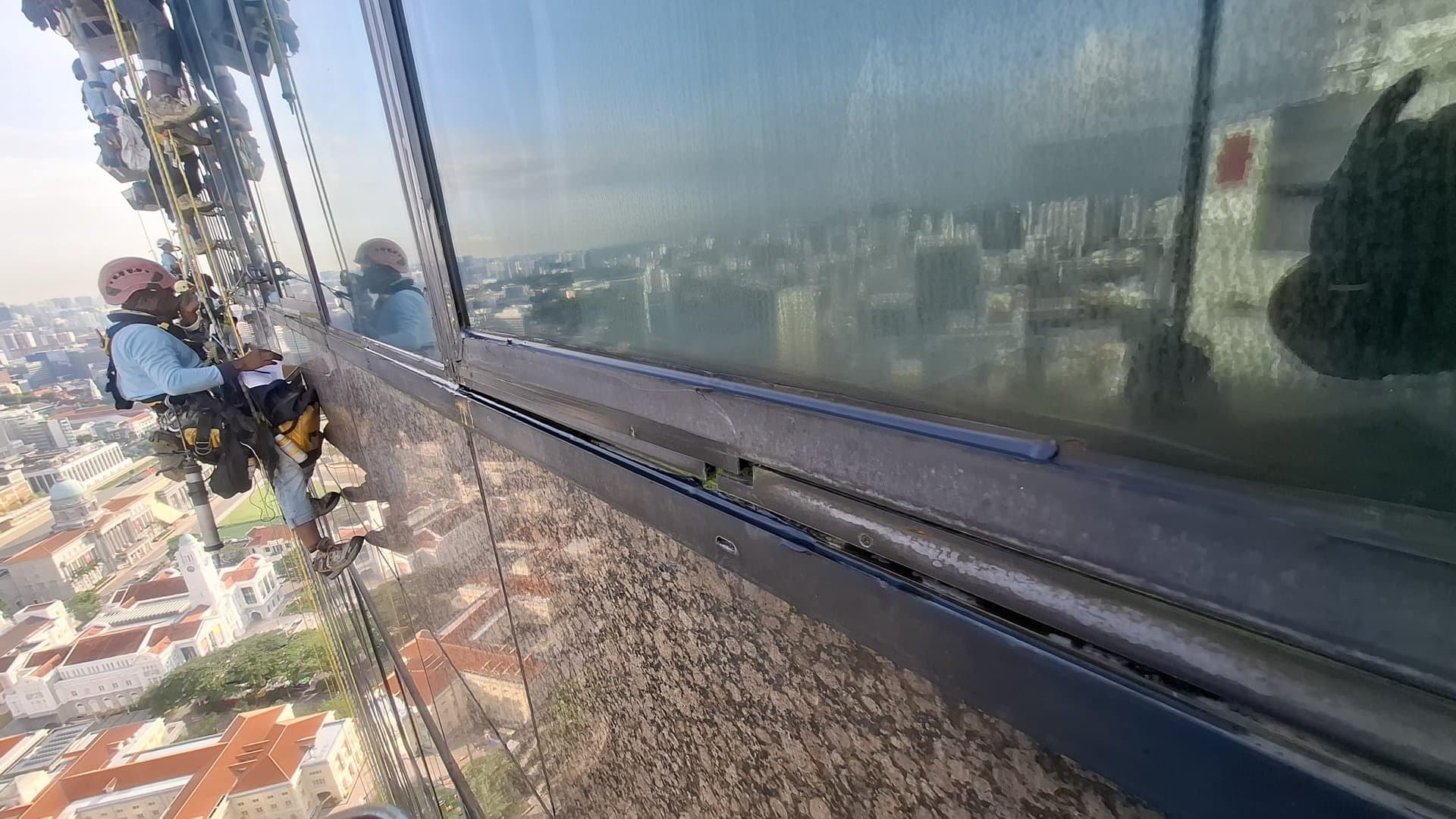
Get a free, no-obligation site inspection
Tell us what’s going wrong and we’ll diagnose the cause, explain your options in plain language, and quote, with no pressure to proceed.
Prefer to talk? Call +65 6289 6811 · We respond within 1 business day.