
Rope Access vs Gondola in Singapore: Which to Use
You have a façade defect on the twenty-fifth floor, a building full of tenants, and two quotes on your desk. One proposes a gondola, the suspended cradle you have seen inching across office towers. The other proposes rope access, a small team abseiling down the wall. Both can reach the work. The question is which one fits your scope, your budget and your timeline.
Here is the short answer first, then the detail behind it, so you can match the method to the job rather than the other way round.
The short answer
For most façade inspection, sealing, coating, cleaning and leak-repair work on an occupied Singapore building, rope access is usually the better choice. It costs less to set up, it starts within days, and it keeps the building open while the work happens.
A gondola earns its place when the work is heavy, sits continuously over one area, or needs a stable platform to hold bulky materials and tools. Large panel replacement, sustained re-cladding and jobs that move a lot of weight up and down all suit a cradle better than a rope.
The honest rule of thumb: if the scope is survey, repair, sealing, coating or cleaning, rope access almost always wins. If it involves heavy materials or a fixed platform over one spot for a long stretch, a gondola may be worth it.
What a gondola and rope access actually are
The two methods reach height in very different ways, and that difference drives everything else.
Gondola, cradle or BMU
A gondola is a suspended working platform lowered from the roof. You will also hear it called a cradle, a suspended scaffold, or, when it is a permanent roof-mounted system, a building maintenance unit (BMU). Technicians stand inside the platform and the whole cradle is raised and lowered along the elevation. Many Singapore condos and commercial towers have a permanent BMU on the roof; on buildings that do not, a temporary suspended platform is rigged for the job.
Rope access
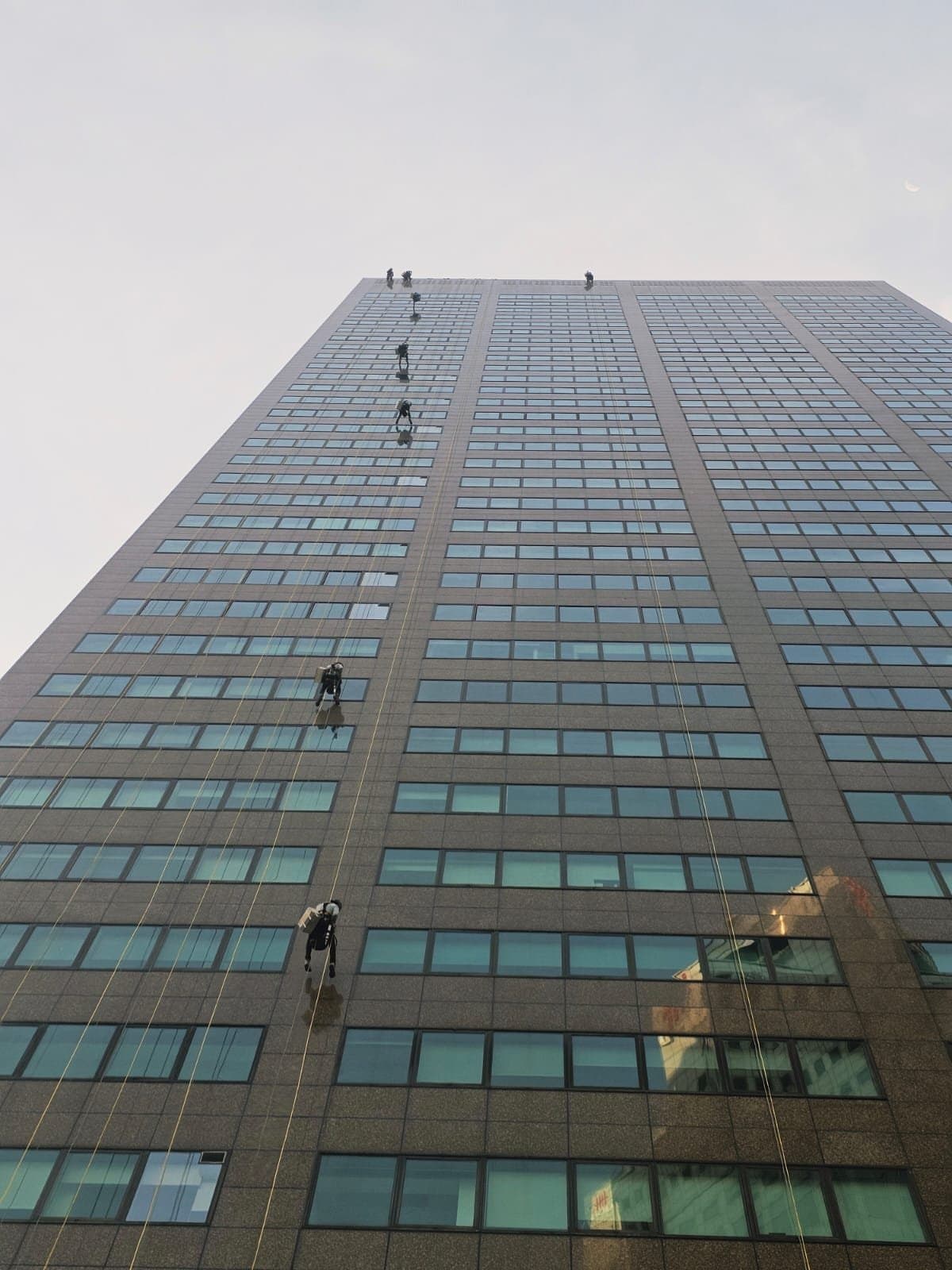
Rope access is the IRATA method: our rope-access technicians descend the face of the building on two independent ropes, a working line and a backup, reaching the exact area that needs attention. There is no platform to rig and no cradle to track across the wall. If you want the full picture of how a single team handles surveys, repairs and coatings from the rope, our overview of rope access works walks through it.
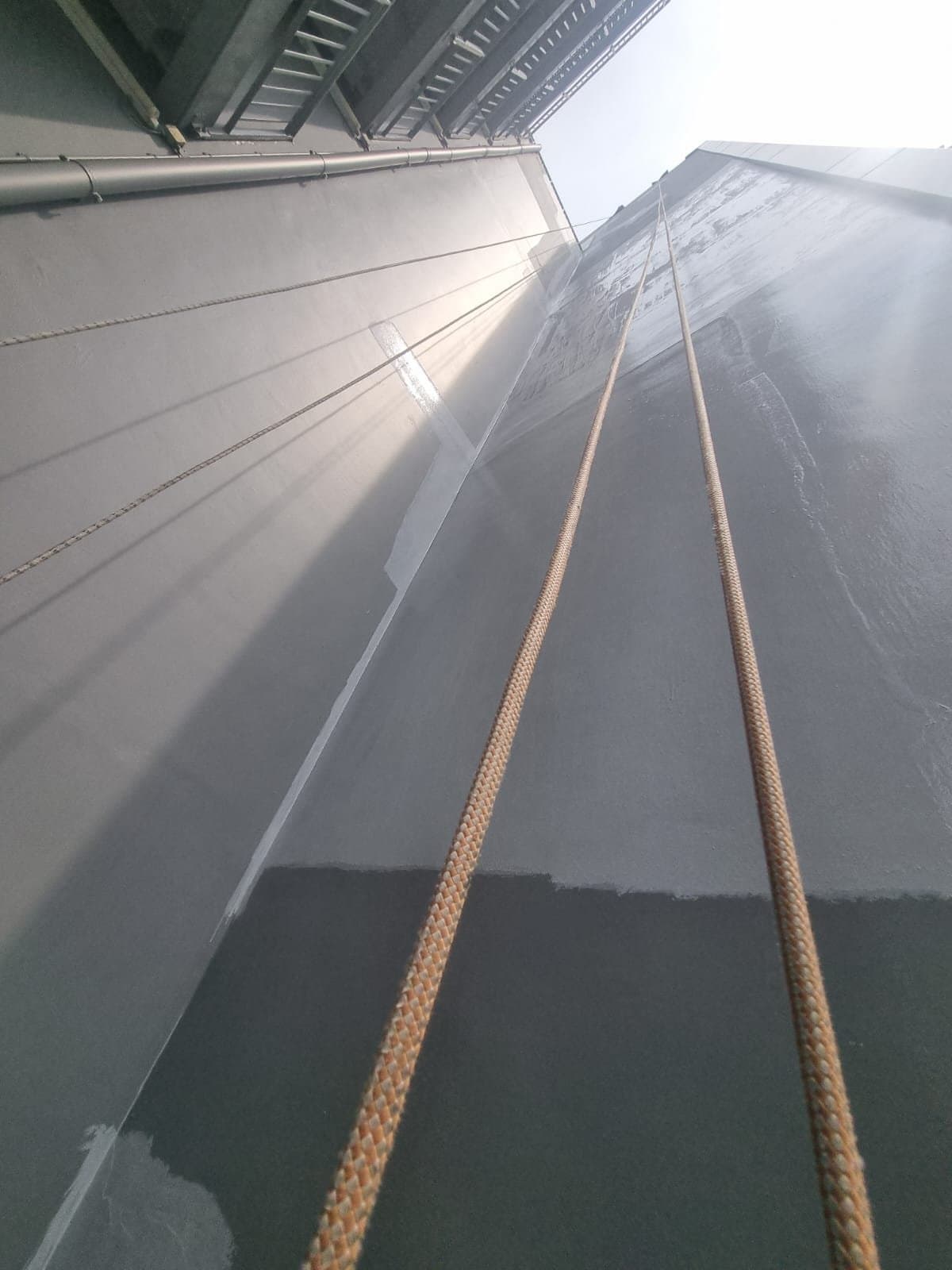 Twin rope-access lines running down a freshly coated commercial façade in Singapore, with a Hydroseal technician working below
Cost: where the money goes
The headline price rarely tells the whole story, so it helps to see where each method spends your money.
A temporary gondola carries set-up costs that are easy to underestimate: rigging the suspension from the roof, the platform rental clock that runs every day the cradle is on site, and de-rigging at the end. If the building has no permanent BMU, those numbers climb. Even with a permanent BMU, you are often paying for servicing, load testing and an operator before any repair work begins.
Rope access strips most of that away. A certified team carries its own access system on their harnesses, so you pay for skilled technicians and the work itself, not for weeks of platform rental. For inspections, leak repairs, sealant renewal, external wall seepage repair and high-rise façade cleaning, the saving is significant and consistent, especially on tall or awkwardly shaped elevations a cradle struggles to track.
Speed and mobilisation
When a leak is spreading or a defect needs fixing before the next BCA façade inspection, waiting is expensive.
A temporary gondola has to be designed, delivered, rigged and checked before anyone goes over the edge, and on a high-rise that lead time alone can run into weeks. A rope-access team mobilises in a fraction of that. Technicians can often be on the wall within days of approval, which matters when you are managing a defect list against a compliance deadline. The same speed advantage is why rope access usually beats a built platform; we cover that head to head in rope access vs scaffolding.
Tenant disruption on an occupied building
This is where the two methods differ most for a live property.
A gondola is visible, slow and noisy as it tracks across the elevation, and it parks over one bay at a time. Residents and tenants see a cradle outside their window, hear the motor, and sometimes lose the use of a balcony or planter ledge while it passes. The cradle can only work the bays it can reach, so coverage of a complex façade takes time.
Rope access is far more discreet. Technicians work from the roof down on narrow elevations, targeting only the spots that need attention, so a mall keeps trading and offices keep running. Fins, ledges, recesses and re-entrant corners that a cradle cannot line up with are simply within reach of a technician on a rope. For high-rise exterior painting and coating in particular, that reach keeps frontages open and the programme moving.
Safety and certification
Both methods are legitimate and both are regulated. Working at height in Singapore sits under the Workplace Safety and Health framework, including the Work at Height requirements, whichever method you choose. A gondola needs a competent operator, regular servicing and load testing. Rope access needs certified technicians and a proper risk assessment in place before the first descent.
Hydroseal teams are IRATA-certified, the international standard for rope access, and the company is bizSafe registered, so your safety documentation and risk assessments are ready before work begins. That paperwork protects your building as much as it protects the crew. Since 1995 we have completed more than 1,000 projects across Singapore, and every finished job is backed by a Certificate of Warranty.
When a gondola is the better call
Rope access is not the answer to everything, and it would be dishonest to pretend otherwise. A gondola is the more practical choice when:
- you are replacing large cladding or glass panels, where a stable platform is needed to handle and fit heavy units
- the work sits over one area for a long stretch and involves a lot of tooling and materials
- the building already has a well-serviced permanent BMU and the scope suits working from a fixed cradle
- two or more workers need to stand together with bulky equipment at the same point
If the job is heavy, material-intensive and concentrated, the cradle pays for itself. If it is light, spread across the elevation and access-driven, the rope wins.
Quick comparison
Here is how the two stack up for a typical survey, repair or maintenance scope on an occupied Singapore building:
- Cost: rope access is cheaper to mobilise for most scopes; a temporary gondola adds rigging, daily platform rental and de-rigging.
- Mobilisation: rope access goes up in days; a temporary cradle takes longer to design, deliver and rig.
- Tenant disruption: rope access is discreet and keeps the building open; a gondola is visible, noisy and parks over one bay at a time.
- Access reach: rope access reaches fins, recesses and awkward elevations; a cradle is limited to bays it can track and line up with.
- Best for: rope access suits inspection, sealing, coating, cleaning and leak repair; a gondola suits heavy panel work and material-intensive jobs over one area.
How we decide on your building
A good contractor recommends the method that suits your scope, not the one that fills the most invoice lines. We look at the elevation, the defect list, the materials involved and how the building is used, then propose rope access, a gondola, or a sensible mix where one elevation suits each. On many jobs the right answer is rope access for the survey and the bulk of the repairs, with a platform brought in only for the few heavy items that genuinely need one.
Common questions
Is rope access cheaper than a gondola in Singapore? For inspection, sealing, coating, cleaning and leak-repair scopes it almost always is, because you avoid the rigging, daily rental and de-rigging that a temporary cradle carries. The gap widens on tall or awkwardly shaped buildings where a gondola is slow to set up and limited in reach.
Is rope access as safe as a gondola? Both are accepted methods under Singapore's Work at Height requirements when done properly. Rope access relies on two independent ropes and IRATA-certified technicians working to a risk assessment; a gondola relies on a serviced, load-tested platform and a trained operator. Hydroseal technicians are IRATA-certified and the company is bizSafe registered.
Can rope access reach the whole façade like a gondola? In most cases it reaches more of it. Technicians can get to fins, ledges, recesses and re-entrant corners that a cradle cannot line up with, which is why rope access suits complex elevations and detailed repair work.
Which is better for an urgent façade leak above an occupied floor? Rope access usually wins, because the team can mobilise in days, reach the exact spot, trace the source and seal it without a cradle tracking past every tenant. If you are still confirming where the water is coming from, our guide on how to spot water damage in your home can help you pin it down first.
Talk to us first
Not sure which method your building needs? That is exactly the question worth answering before you commit to a quote, because the right access method follows the scope. Hydroseal has worked on Singapore façades by rope since 1995, and we are happy to take a look before you decide. We offer a free, no-obligation site inspection, a clear recommendation on whether rope access, a gondola or a mix fits your job, and a Certificate of Warranty on completed work. Call +65 6289 6811 or email enquiry@hydroseal.com.sg and we will help you choose the approach that genuinely suits your building.
Unsure about your property’s waterproofing?
Hydroseal offers a free, no-obligation site inspection, honest advice, no pressure.
Get a free quote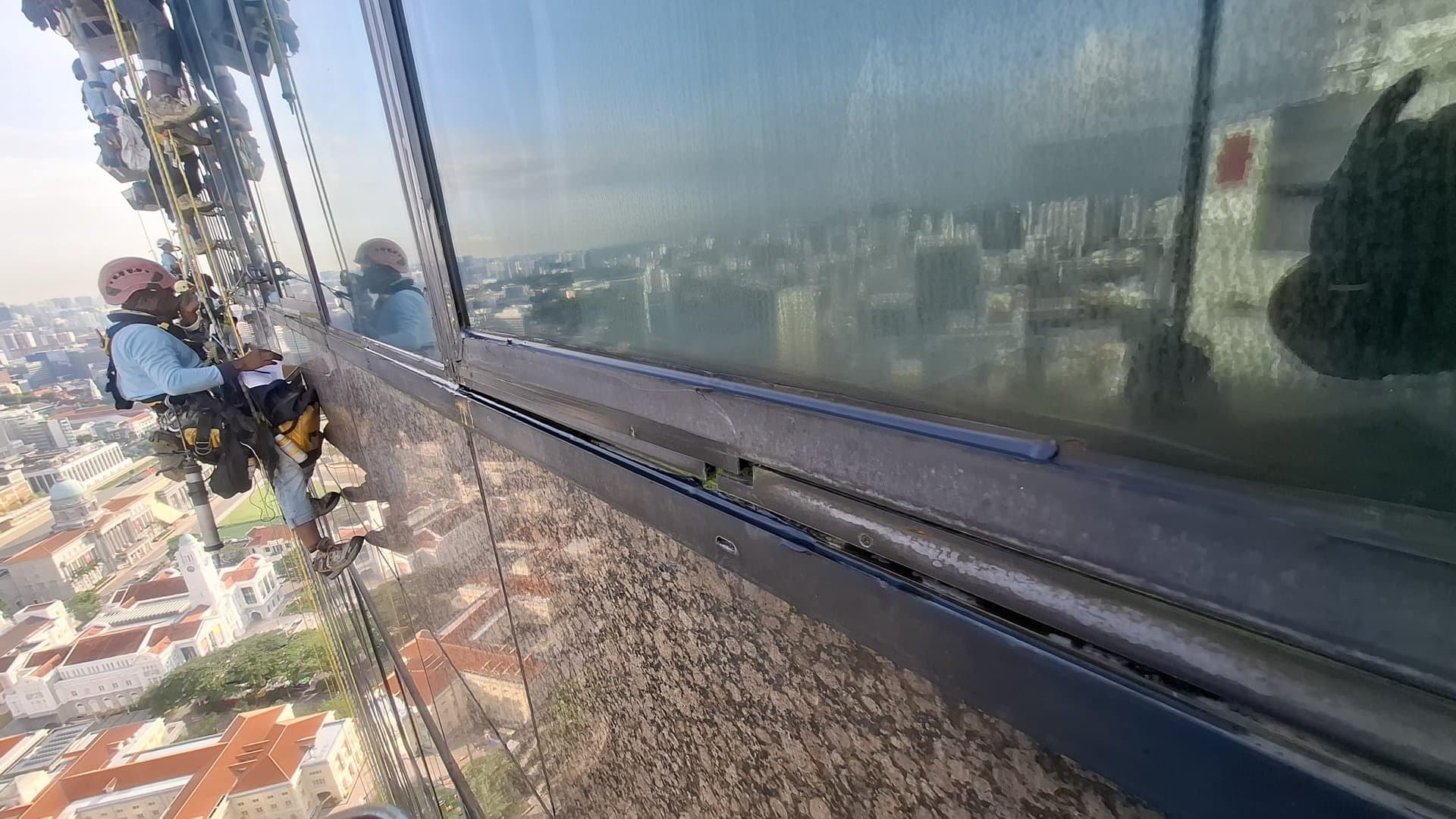
Get a free, no-obligation site inspection
Tell us what’s going wrong and we’ll diagnose the cause, explain your options in plain language, and quote, with no pressure to proceed.
Prefer to talk? Call +65 6289 6811 · We respond within 1 business day.