
How Long Does Façade Sealant Last in Singapore?
Façade sealant is the flexible bead that runs along every joint on a building's exterior, between cladding panels, around windows, and across curtain-wall seams. It is easy to forget about because it sits high up and out of sight, but it is doing one of the most important jobs on the building. So how long does it actually last?
Here is the direct answer first, then the detail on what shortens that life, the signs it is going, and when it makes sense to reseal.
The short answer
In Singapore, façade sealant typically lasts 7 to 15 years before it needs replacing.
A good silicone sealant, correctly specified and properly installed, sits at the upper end of that range. A cheaper product, a poorly prepared joint, or a harsh, sun-facing elevation can push failure to the lower end, sometimes sooner. The figure on the manufacturer's data sheet assumes ideal conditions. Our tropical climate is not ideal, so it is sensible to treat the lower end of the range as the realistic one for most exposed elevations here.
The honest version is that no single number fits a whole building. The same block can have north-facing joints still in good order while the west elevation, which takes the afternoon sun and the worst of the wind-driven rain, has already given up. That is why we judge sealant by its condition rather than purely by its age.
What shortens sealant life in Singapore
Our climate is unusually hard on sealant, which is why joints here often fail before owners expect them to. A few factors do most of the damage.
- Intense UV. Singapore sits almost on the equator, so ultraviolet exposure is strong and year-round. UV breaks down the polymers in cheaper sealants, leaving them chalky and brittle.
- Daily thermal movement. A façade heats up under the midday sun and cools sharply when an afternoon storm rolls in. Joints open and close with that movement every single day, working the sealant until it loses its stretch.
- Heavy, wind-driven rain. The monsoon does not just wet the building, it drives water sideways into every joint at pressure, finding any bead that has started to lift.
- Salt air near the coast. On seafront condos and buildings near the water, salt-laden air adds another layer of attack on both the sealant and the surfaces it bonds to.
Put together, these mean a sealant that might comfortably last fifteen years in a milder climate can be tired in eight or nine here. It is not a defect, it is simply the environment doing its work.
How installation affects how long it lasts
Climate is only half the story. The other half is how the joint was sealed in the first place. A sealant is only as good as its preparation, and this is where a surprising number of early failures come from.
Proper resealing means the old material is fully cut out, the joint cleaned and primed, the correct grade of sealant chosen for that surface and movement, and the bead tooled to the right depth and profile. Skip any of those steps, or simply gun fresh sealant over an old, dirty joint, and even a premium product will lift and split within a year or two. If you have a façade that seems to need attention far too often, the cause is frequently a past repair that sealed over the problem instead of treating it. Our guide to what a waterproofing sealant is explains why the right product and a clean joint matter so much.
Signs your façade sealant is failing
You rarely get to inspect high-level joints up close, but several signs are visible from the ground or from inside the building. Any one of these is worth acting on.
- Cracking, chalking or hardening. Healthy sealant is rubbery and flexible. When it turns crumbly, dusty or hard to the touch, it has lost the elasticity that keeps water out.
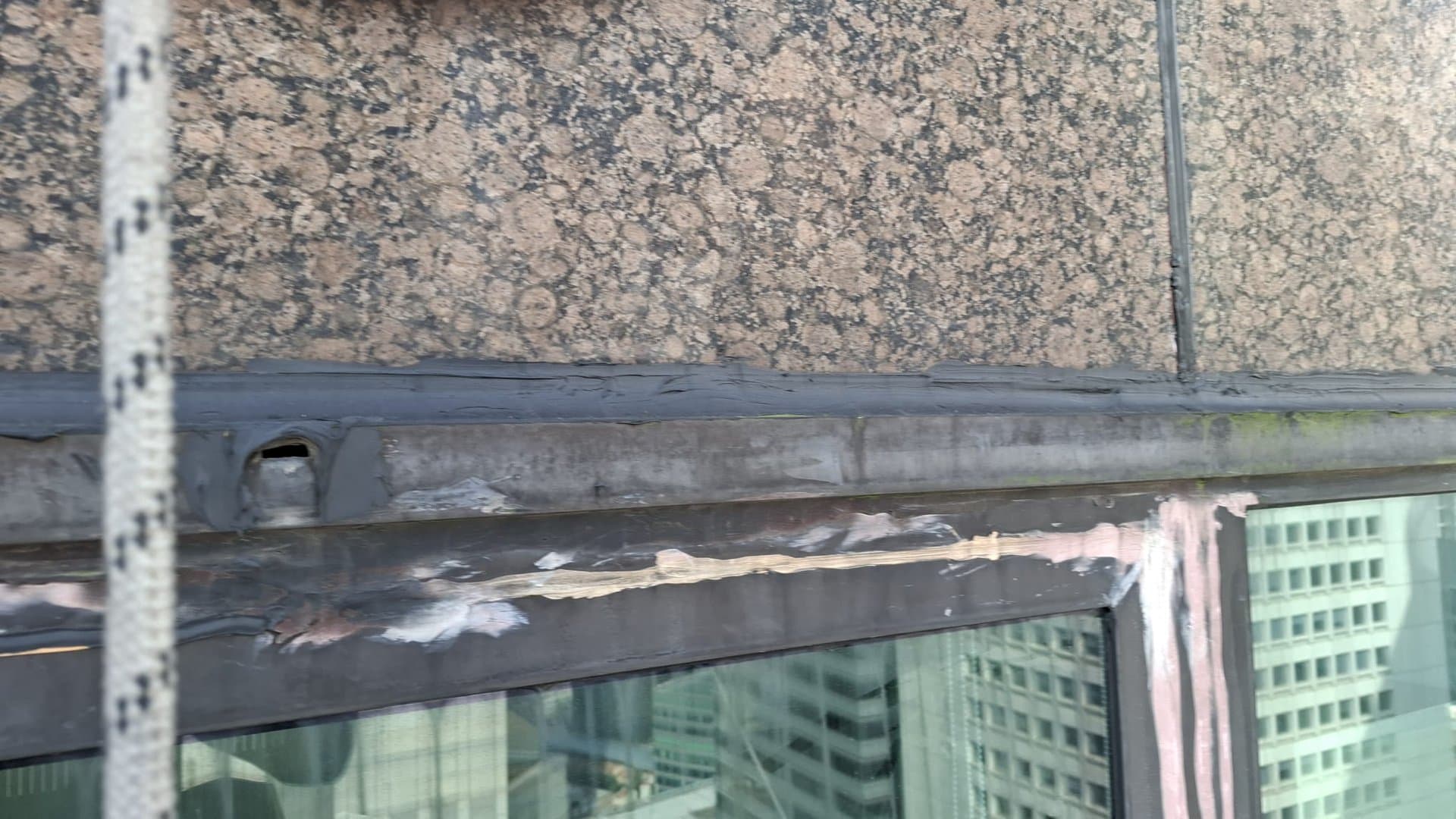
- Peeling or lifting at the edges. Once a bead pulls away from one face of the joint, it has failed, even if the rest of it looks intact. The photo below shows exactly this.
- Gaps and shrinkage. Old sealant shrinks back and leaves a visible gap along the joint, an open path straight into the wall.
- Fresh stains or seepage inside. Damp patches, peeling paint or water marks appearing on the inside of an external wall after heavy rain often trace back to a failed joint outside.
Perished façade sealant peeling from a high-rise glazing joint in Singapore, a sign the bead has reached the end of its life and needs replacing
If you are seeing interior stains and are not sure where they start, our guide on how to spot water damage in your home covers the early signs worth catching before a small leak becomes a costly repair.
When should you reseal?
There are two sensible triggers for resealing a façade.
The first is condition. If joints are cracked, peeling or letting water in, the sealant has reached the end of its life regardless of its age, and resealing the affected elevations is the lasting fix. Patching a single failed joint while the rest of that elevation is the same age tends to be a false economy, because the neighbouring joints usually follow within a season or two.
The second is a planned cycle. For condos and commercial buildings, it is far cheaper and less disruptive to reseal on a schedule, before joints fail, than to react to leaks one at a time. Many buildings here pair façade resealing with the close-up inspection they need anyway, since the access is the same. If your building is due a BCA façade inspection, it is a natural moment to assess the sealant and reseal what is near the end of its life in the same visit.
For an MCST or a building manager, treating sealant as a planned maintenance item rather than an emergency repair keeps both the cost and the tenant disruption under control.
How façade sealant is replaced
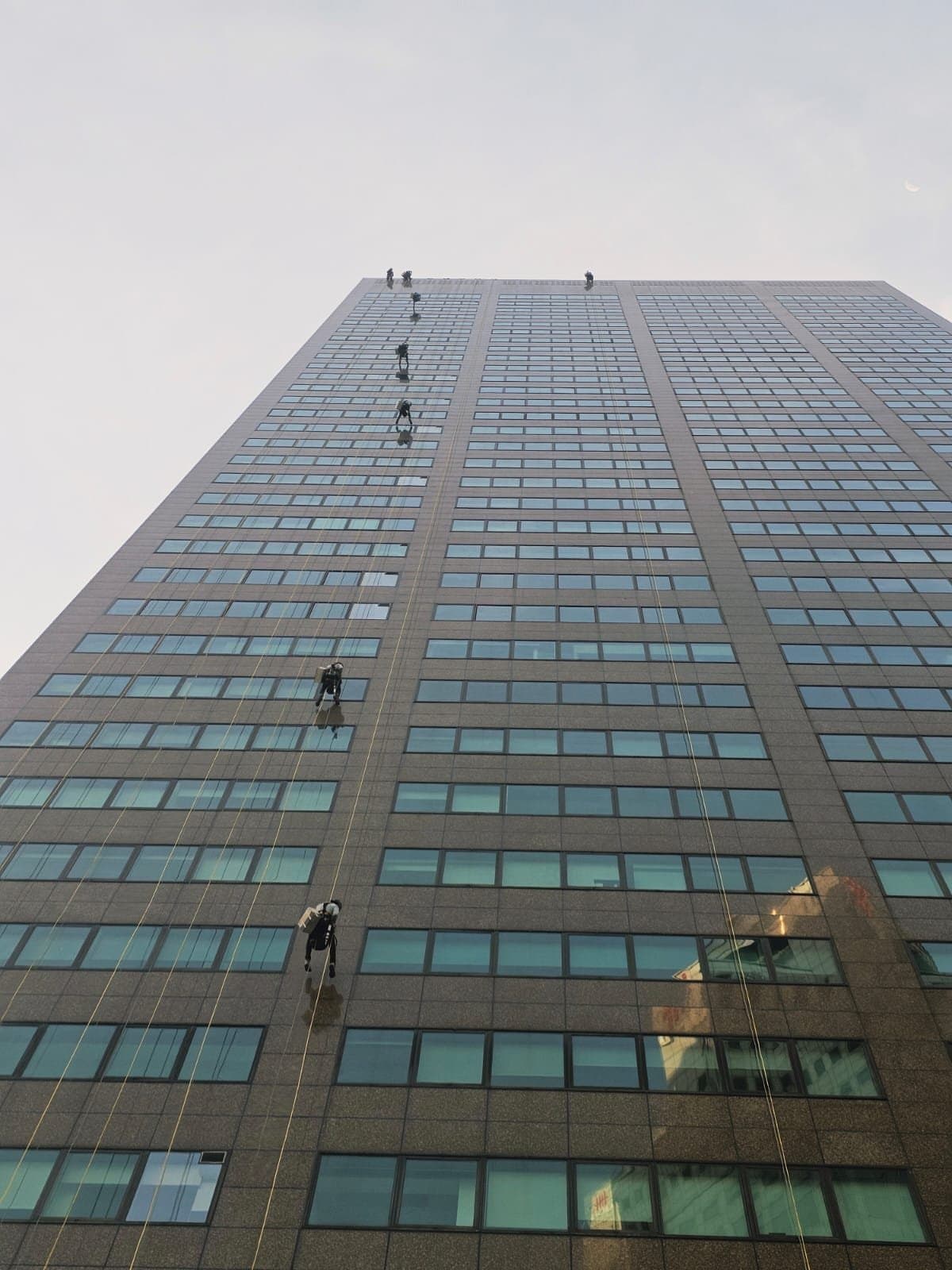
Replacing high-level sealant does not have to mean wrapping a tower in scaffolding. On most condos and commercial buildings, our IRATA-certified technicians reach every joint by rope, cut out the perished sealant, prepare the joint, and re-gun it with the correct weather-grade product, all without a single scaffold pole or a closed walkway below.
That is the bulk of what we do on a sealant replacement project: working elevation by elevation, with the building staying open and occupied throughout. Because rope access is faster to set up and pack down than scaffolding, it is also far less costly for a job that is essentially detailed work spread over a large area. If you want the fuller comparison, we have written about rope access versus scaffolding for building maintenance in Singapore.
Common questions
How often should you reseal a building façade in Singapore? Most façades need resealing every 7 to 15 years, with sun-facing and coastal elevations at the shorter end. Buildings on a planned maintenance cycle often reseal before joints fail, rather than waiting for leaks.
Can you just reseal the joints that are leaking? You can, but it is often a false economy. Joints of the same age on the same elevation usually fail around the same time, so resealing the whole elevation tends to be more cost-effective than returning for one joint after another.
Does failed façade sealant cause interior leaks? Yes. A cracked or lifted joint lets wind-driven rain into the wall, which can then show up as damp patches, peeling paint or stains on the inside, sometimes a fair distance from the actual entry point.
Is silicone or polyurethane better for façade joints? It depends on the surface and how much the joint moves. Silicone is highly UV-stable and flexible, which suits exposed glazing and curtain-wall joints, while polyurethane is tough and abrasion-resistant for other details. The right choice is part of getting the repair to last.
A simple takeaway
Façade sealant is a maintenance item, not a one-time job. In Singapore's sun, heat and monsoon rain, plan for it to last somewhere between 7 and 15 years, lean towards the shorter end on exposed elevations, and judge it by its condition rather than its age. Catching tired joints before they fail is always cheaper than chasing the leaks that follow.
Hydroseal has waterproofed and resealed Singapore buildings since 1995. We offer a free, no-obligation site inspection, an honest assessment of which joints actually need attention, and a Certificate of Warranty on completed work. Call us at +65 6289 6811 or email enquiry@hydroseal.com.sg to arrange a look at your façade.
Unsure about your property’s waterproofing?
Hydroseal offers a free, no-obligation site inspection, honest advice, no pressure.
Get a free quote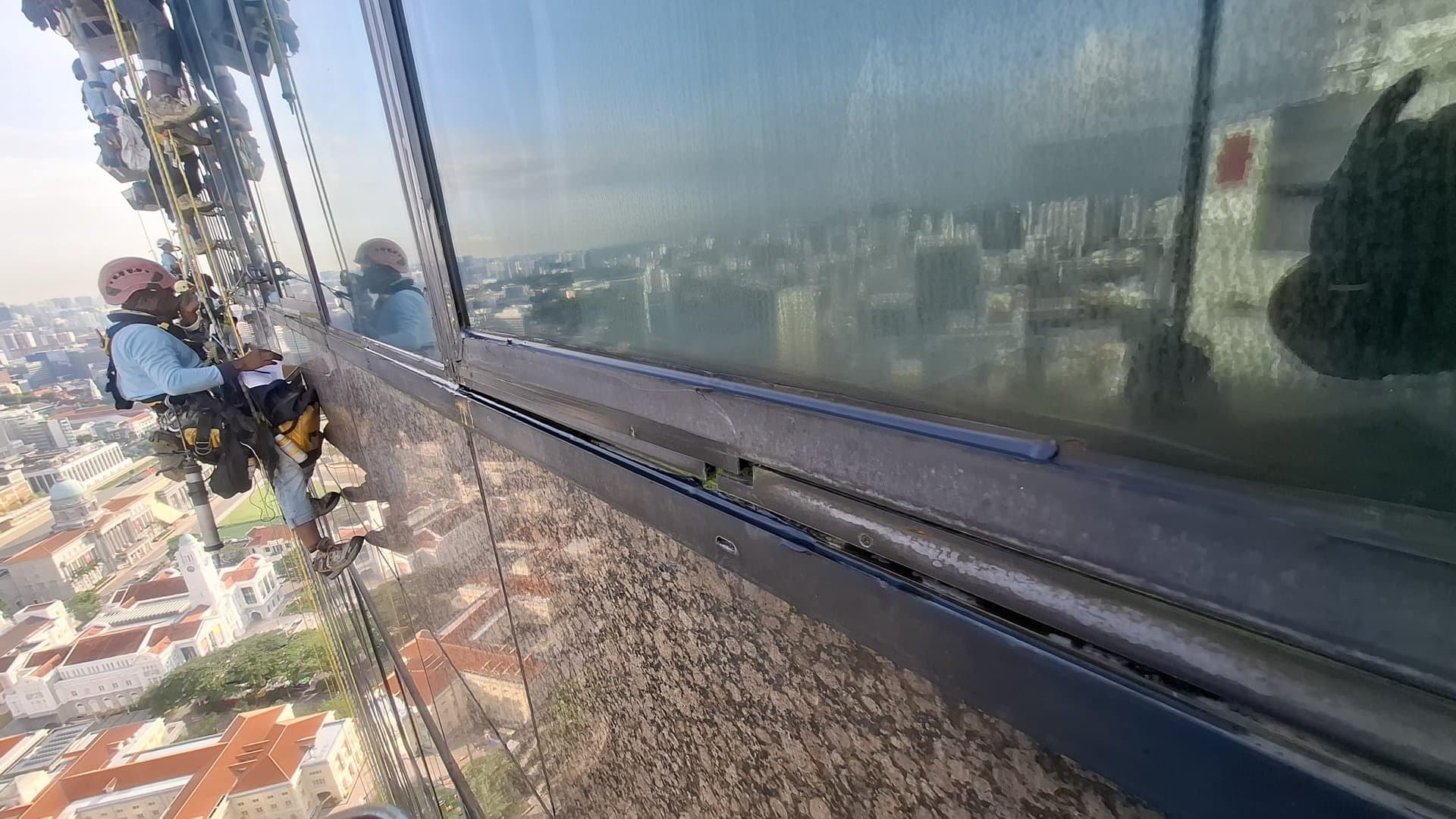
Get a free, no-obligation site inspection
Tell us what’s going wrong and we’ll diagnose the cause, explain your options in plain language, and quote, with no pressure to proceed.
Prefer to talk? Call +65 6289 6811 · We respond within 1 business day.