
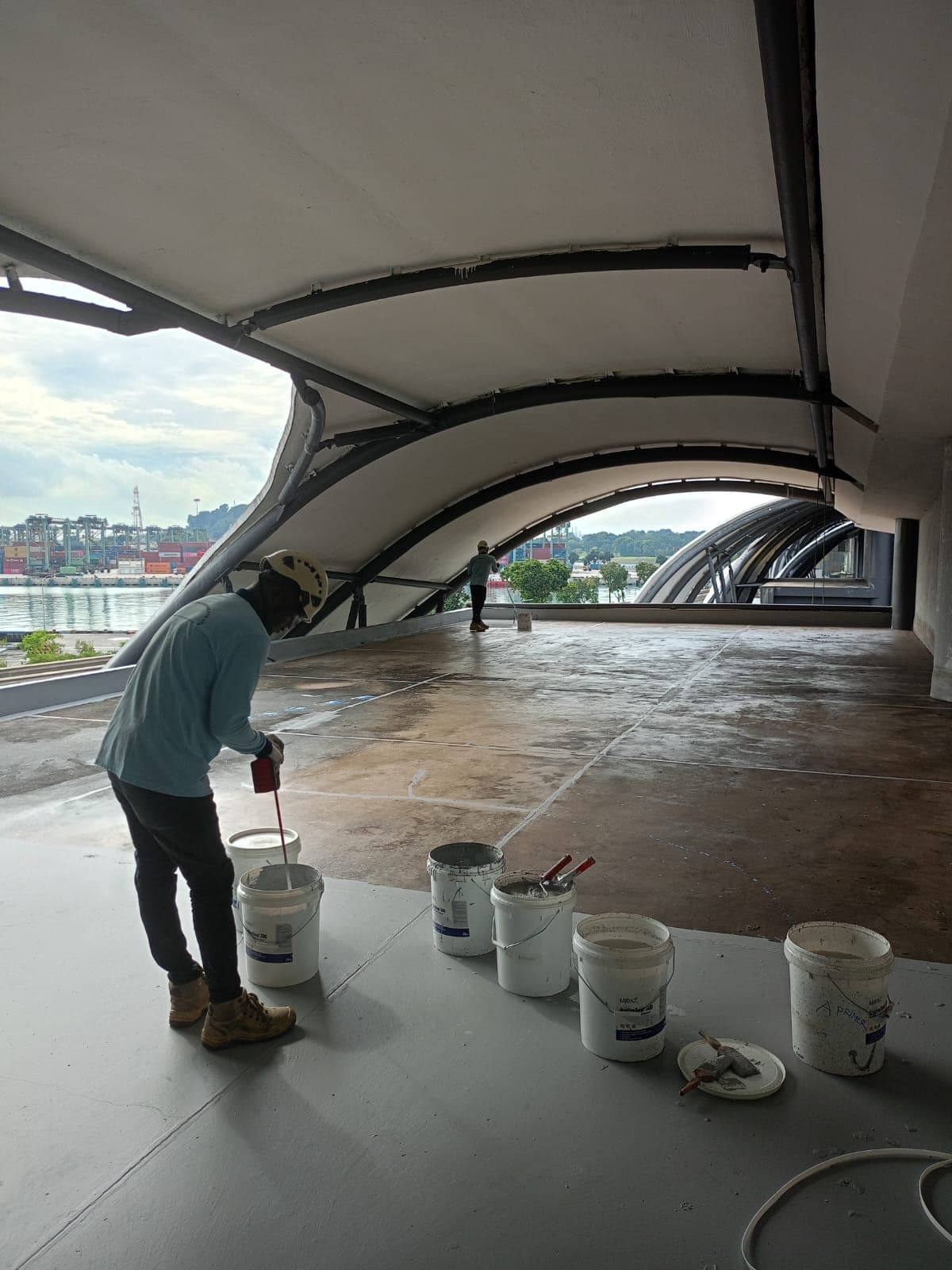
Balcony Leaking After Rain? A Singapore Repair Guide
A balcony that leaks after rain may have a problem at the drain, the waterproofing layer, a wall junction, the doorway or another detail. Water appearing below the balcony does not, by itself, identify which part has failed. Replacing tile grout or applying a coating should follow an assessment of the likely route.
For a private condo or landed homeowner, start by recording when the leak occurs and where water collects or appears. Then ask for a repair proposal that explains the defect, the treatment boundary and how the result will be checked.
What can you record safely?
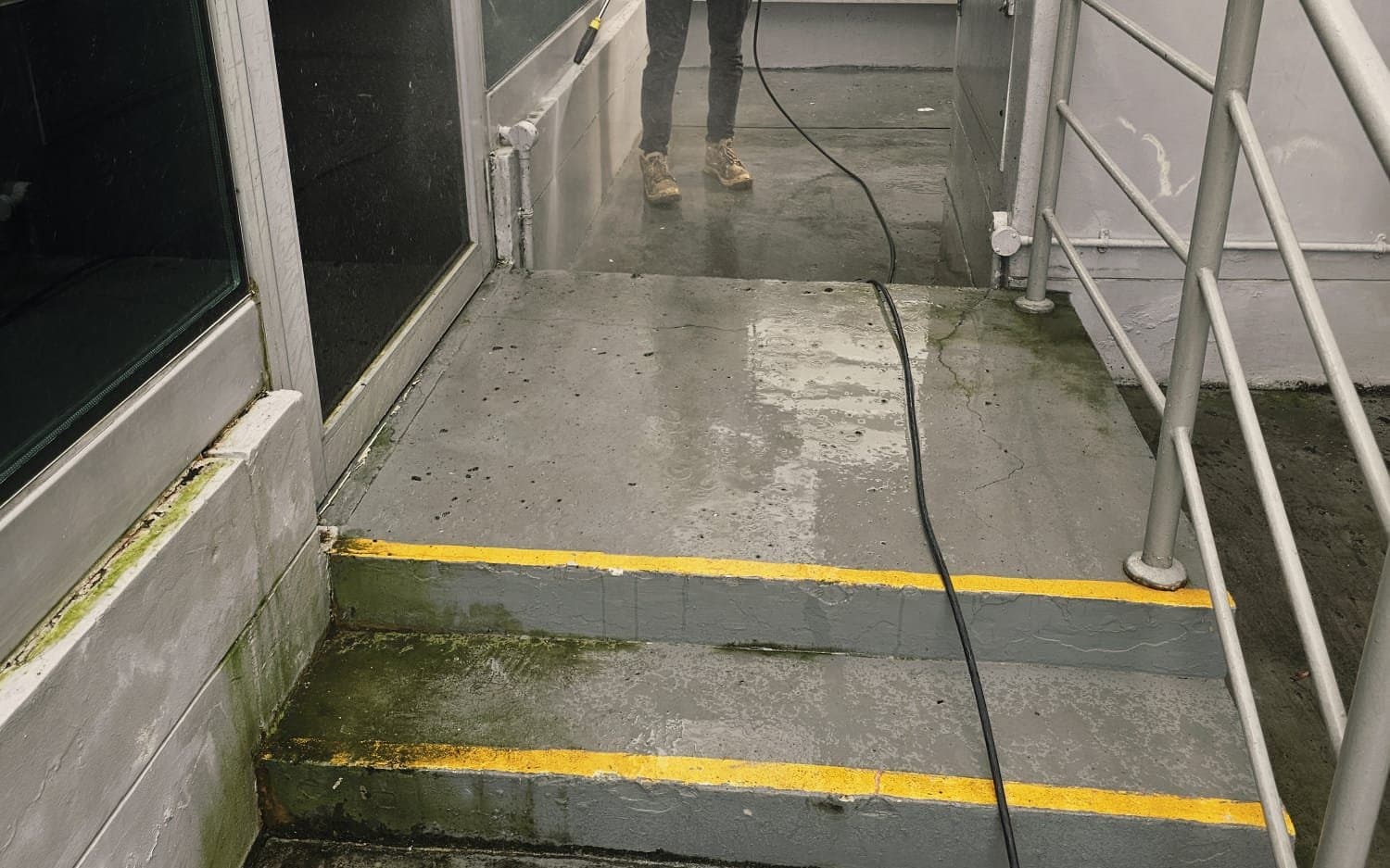
From an accessible, secure position, photograph the affected interior area and the balcony surface. Note whether water collects near an outlet, against a wall or beside the doorway. Record how long it remains after the rain stops, without assuming that a particular duration proves membrane failure.
Keep the date and any relevant circumstances, such as a blocked outlet, recent tiling or work around a door. If water enters the room, record the first visible location as well as the final wet area.
Do not lean over an edge, access the façade or lift heavy fittings to investigate. Do not deliberately flood the balcony. Testing needs to account for the construction and the possibility of sending more water into your home or the unit below.
Distinguish drainage from waterproofing
A blocked outlet can cause water to accumulate. Poor falls or an unsuitable transition to the outlet may also affect drainage. However, clearing the outlet does not prove that the adjoining waterproofing connection is intact.
The waterproofing layer may be beneath the tiles, so its condition cannot necessarily be judged from the surface. Cracked grout is worth recording, but it does not reveal the full state of the concealed assembly. Conversely, neat grout does not establish that the balcony is watertight.
Ask the assessor to explain which findings concern surface drainage and which concern water passing through the construction. The repair may need to address both, but they should not be treated as interchangeable tasks.
Check the interfaces, not only the middle of the floor
The junction between the balcony and the wall, the door threshold, penetrations and the outlet are important parts of the investigation. A leak close to a doorway may involve the threshold or adjoining frame rather than a defect in the centre of the balcony.
The surrounding façade can also be relevant. If leakage varies with wind-driven rain or appears at a window or door frame, share that pattern. Our waterproofing sealant guide explains why water near an opening may involve several connected details.
A contractor should identify what can be assessed visually and what requires testing or opening up. Any remaining uncertainty should be reflected in the proposed scope, rather than hidden behind a definite claim about the cause.
Can the balcony be repaired without removing tiles?
A limited surface or joint treatment may be considered where the diagnosed defect is suitable, the substrate is sound and the proposed system can form a reliable connection. Its compatibility, exposure and intended use need to be checked.
Tile removal may be necessary where the concealed waterproofing, substrate, falls or drain connection require reconstruction. A surface treatment cannot automatically correct those conditions beneath it.
Compare the intended result and limitations of each proposal. Our hacking versus non-hacking guide explains why minimal disturbance is one consideration rather than proof that a method is appropriate. Ask what would trigger a different approach if the initial inspection cannot establish the concealed condition.
What should condo owners arrange?
Inform the managing agent where the balcony, façade or a neighbouring unit may be involved. Agree access for investigation and any proposed external work. Keep photographs, reports and communications together so the parties can review the same evidence.
Do not assume that the visible location of a leak settles responsibility. Lot boundaries, the affected component and the findings matter. If water is appearing in a unit below, our inter-floor leak guide explains the relevant investigation and responsibility questions.
For a landed home, also tell the contractor about extensions, previous balcony alterations and any available waterproofing records. Those details can change how the assembly should be assessed.
What should the quotation and handover cover?
Request the treated area, preparation, system, outlet and junction details, protection of adjacent finishes and reinstatement. Identify exclusions, particularly where a door, façade or plumbing component is to be handled separately.
Agree an appropriate completion check and any observation period. Keep a record of the conditions under which the repair was checked, along with photographs of concealed work before finishes are reinstated. Written warranty terms should identify the covered area and the process for reporting recurrence.
Contact Hydroseal for a free, no-obligation inspection of a leaking balcony. Send the rain-related leak history and photographs first so the assessment can focus on the details that need to be resolved.
Unsure about your property’s waterproofing?
Hydroseal offers a free, no-obligation site inspection, honest advice, no pressure.
Get a free quote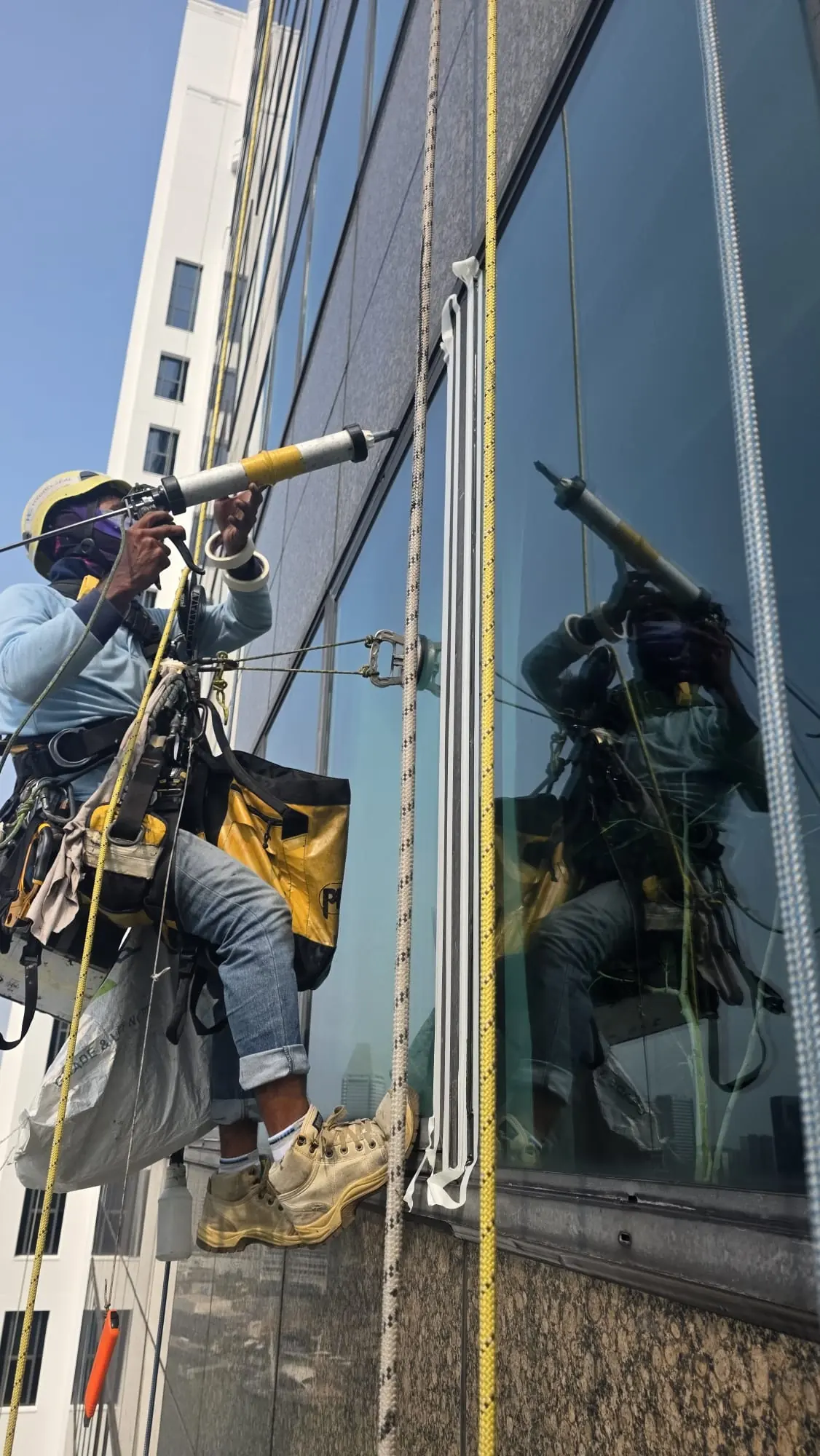
Get a free, no-obligation site inspection
Tell us what’s going wrong and we’ll diagnose the cause, explain your options in plain language, and quote, with no pressure to proceed.
Prefer to talk? Call +65 6289 6811 · We respond within 1 business day.