
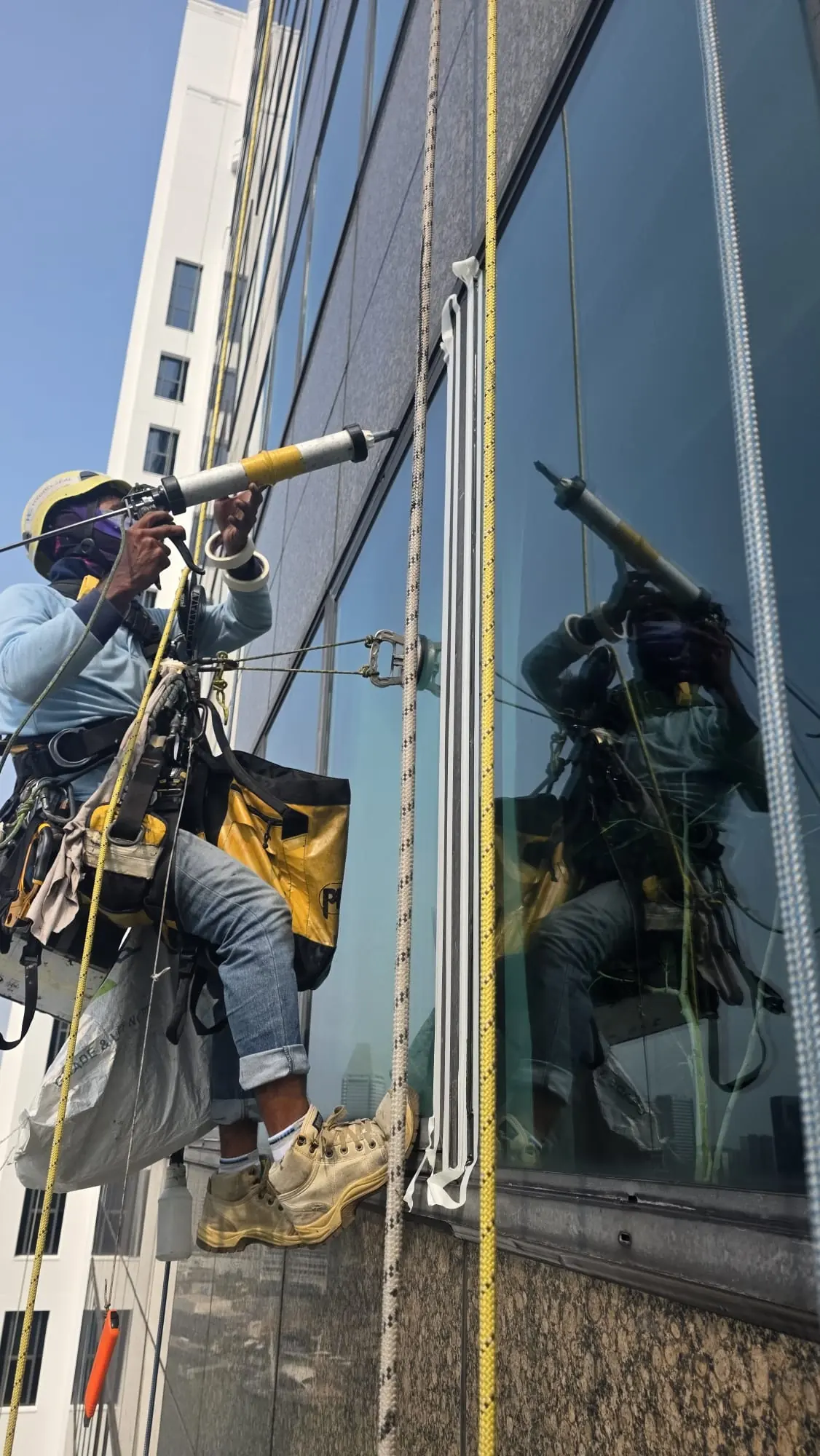
Window Leaking in Heavy Rain? A Singapore Repair Guide
A window that leaks during heavy rain may have a defect at its perimeter, glazing, frame connections, drainage or surrounding wall. Water on the sill does not prove that the external sealant is the only problem. A useful assessment distinguishes those parts before recommending resealing or replacement.
For a private condo or landed homeowner, record where water first appears and how the leak relates to rain. Avoid sealing drainage openings or attempting external access yourself. The aim is to preserve useful evidence while arranging an investigation of the complete opening.
Why might the leak appear only in heavier rain?
Different rain conditions can expose different weaknesses. Wind-driven rain, prolonged wetting or water accumulating around an opening may reveal a route that is not apparent during lighter showers. The pattern helps the investigator decide what to examine; it does not identify the defective component by itself.
Note whether water enters at the top, side, sill or wall beside the frame. A stain above the opening, for example, may prompt examination of construction beyond the window. Water can travel within an assembly before becoming visible indoors.
Keep a short history of previous resealing, window replacement or façade work. If a repair helped temporarily, record what was treated and when the symptom returned. That history can be more useful than another close-up photograph of wet paint.
Four parts the assessment should separate
The joint around the frame
The perimeter connects the window to the surrounding construction. Its condition, preparation and compatible sealing system matter. A new bead applied over an unsuitable surface may not address the underlying defect.
Glazing and frame connections
Water may involve interfaces within the window assembly, including joints and seals. Those details need to be assessed for the actual window type. A façade coating cannot be assumed to repair a defect within the frame.
Designed drainage routes
Some assemblies use drainage paths to manage water. Blocking an opening because it appears to admit rain can interfere with that function. Ask a competent person to identify the opening and its purpose before any alteration is proposed.
The adjacent wall and construction above
The source may lie in a crack, joint, flashing or another interface beyond the frame. Wiss, Janney, Elstner Associates' water-infiltration primer supports a systematic investigation of building assemblies. For the homeowner, this means asking what evidence links the proposed repair to the observed leak.
What can you do before the visit?
Move vulnerable belongings away from the wet area where it is safe to do so, and photograph the first signs of water. Keep clear of affected electrical fittings and arrange appropriate assistance if they are involved.
Record the date, approximate timing, rain conditions and whether the window was closed. Photographs should show both the wet detail and its position within the room. Avoid dismantling frame parts or applying temporary sealant that may obscure the route before the assessment.
If the window or its fittings appear loose or damaged, treat that as a separate safety concern. BCA's window-safety information addresses window maintenance and safety; stopping a leak does not establish that the window is mechanically sound.
Reseal, repair or replace?
Resealing may be appropriate where the assessed problem is a joint and a suitable replacement detail can be formed. The scope should identify removal and preparation, the selected system and the boundary of the work.
Repair or replacement of other components may be needed where the frame, glazing interfaces or surrounding construction is involved. Ask why the proposed option addresses the findings and what remains excluded. Replacing an entire window should not be assumed necessary solely because a leak occurred.
Similarly, waterproofing sealant is a material for suitable joints, not a universal treatment for every window-related water path. If the source remains uncertain, agree the next investigation step rather than treating repeated resealing as a diagnosis.
What should condo owners clarify?
Inform the managing agent where external access or common-property work may be required. Agree how the affected components and relevant responsibilities will be established. The visible position of water alone is not a reliable basis for deciding who must pay.
Provide access to the internal symptoms where needed and retain written findings. For a building with reports across several units, a mapped façade investigation may be more useful than treating each report as an unrelated sealant job.
Verify the repair and keep its limits clear
Agree an appropriate check with the contractor, including any controlled testing or observation during relevant rainfall. Record the location, conditions and result. A successful check at one opening should not be presented as verification of every window in the home.
Keep before-and-after photographs, the repair scope and written warranty terms. Contact Hydroseal for a free, no-obligation inspection, sharing the leak history so the assessment can focus on the window and surrounding details that need attention.
Unsure about your property’s waterproofing?
Hydroseal offers a free, no-obligation site inspection, honest advice, no pressure.
Get a free quote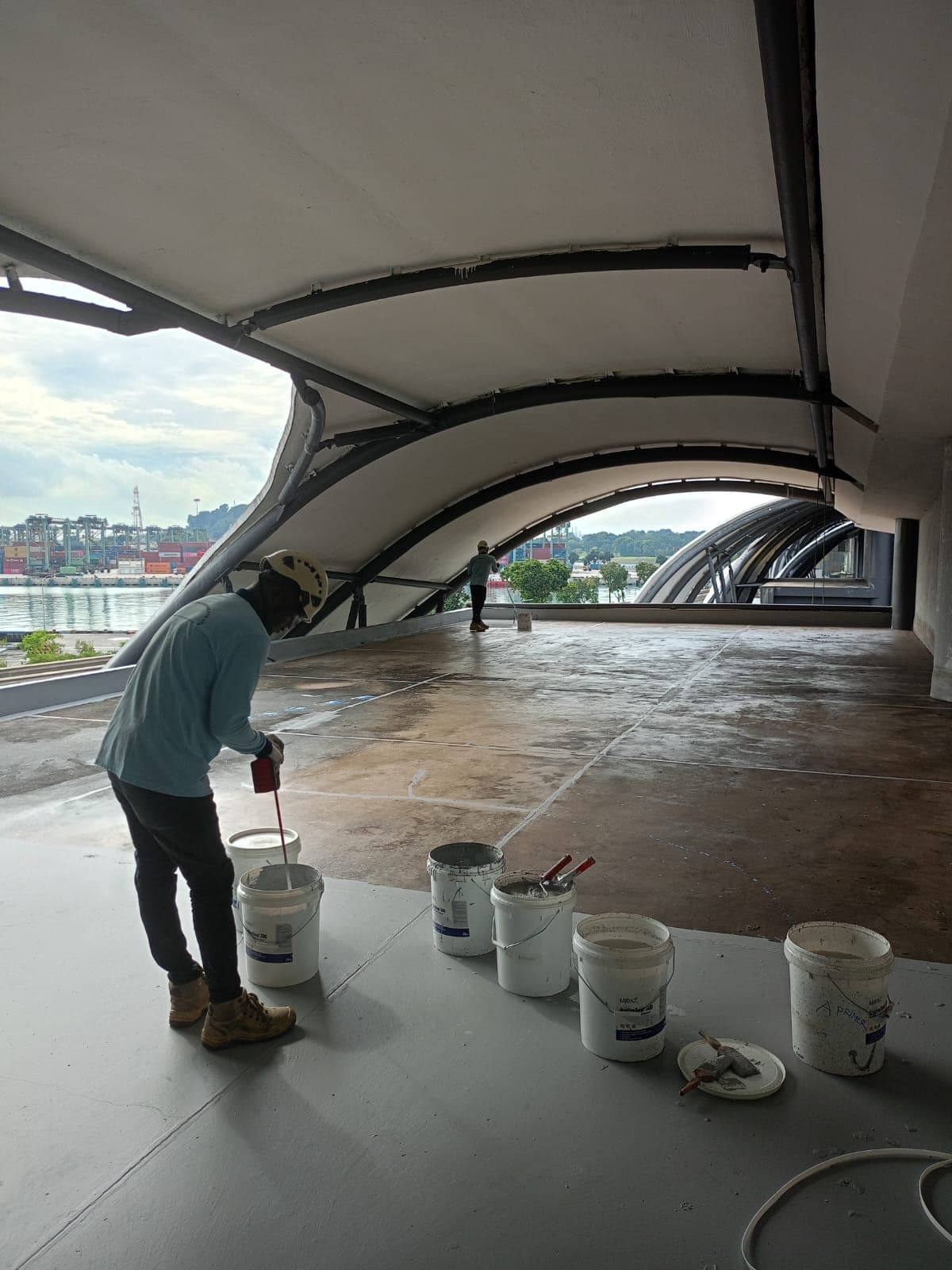
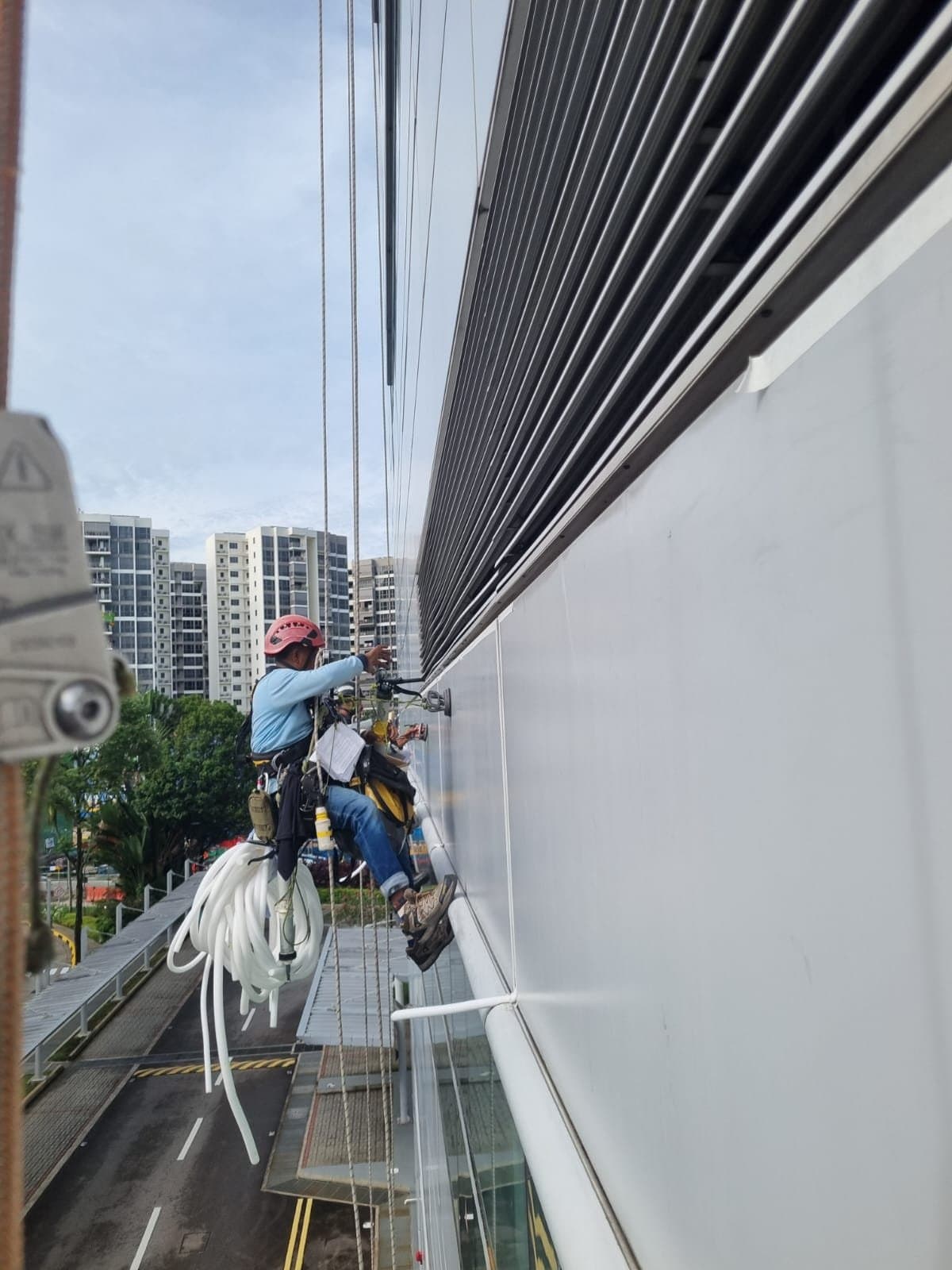
Get a free, no-obligation site inspection
Tell us what’s going wrong and we’ll diagnose the cause, explain your options in plain language, and quote, with no pressure to proceed.
Prefer to talk? Call +65 6289 6811 · We respond within 1 business day.