
Damp Wall After Leak Repair? Checks Before Repainting
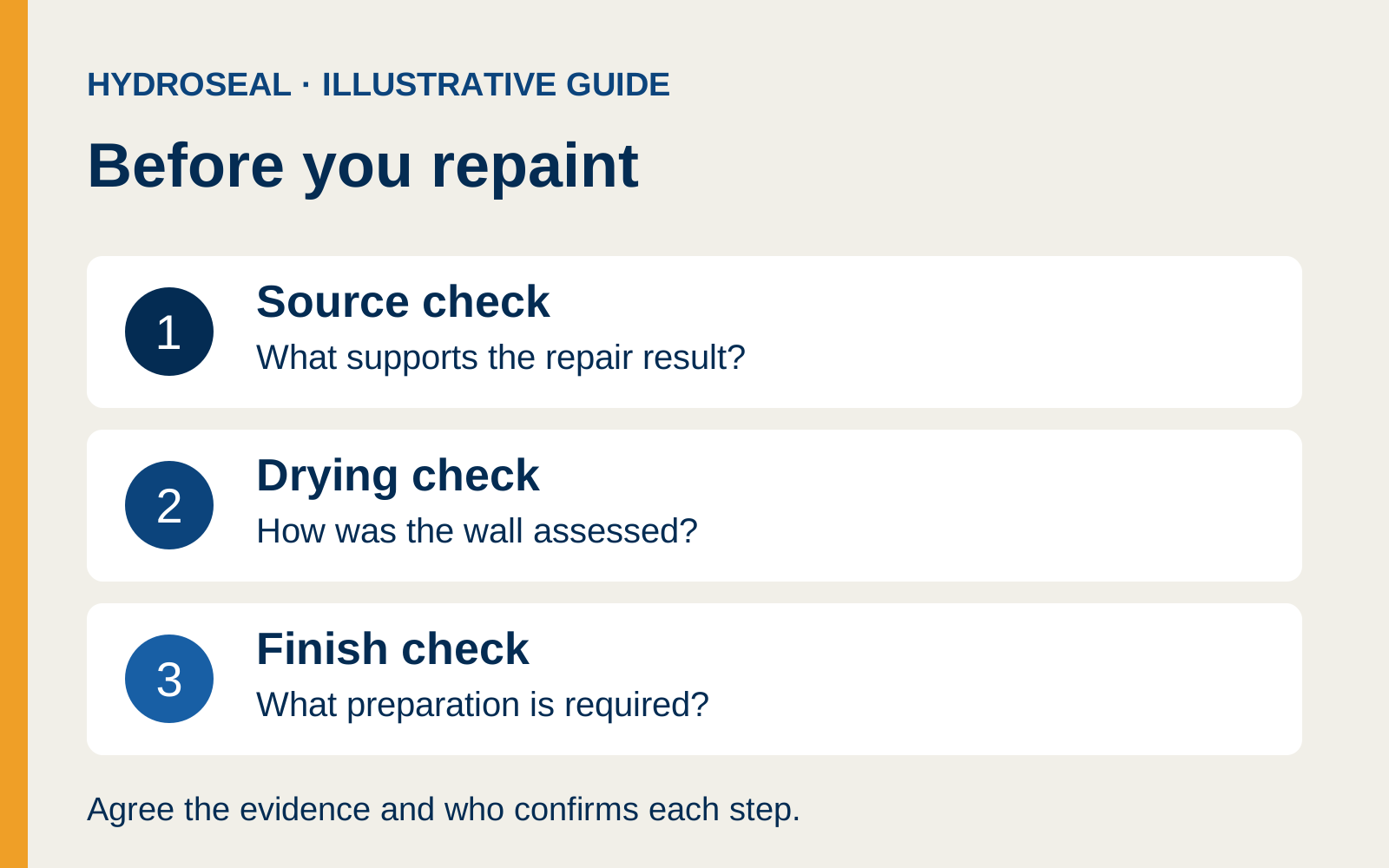
If a wall still looks damp after a leak repair, ask for a follow-up assessment before booking the repaint. The checks should establish whether water is still entering, whether the affected materials are ready for decoration and what surface preparation is needed. A remaining mark alone cannot settle those questions.
For a private condo or landed home in Singapore, it helps to agree these checks with the repair contractor and decorator together. That gives you a clear sequence and someone responsible for confirming when the next stage can begin.
Start with what changed after the repair
Keep the repair date, treated location and agreed scope beside your photographs. Compare the same area from the same position. Record whether the mark is unchanged, expanding, becoming darker or accompanied by fresh droplets. Add the date and any relevant rain or bathroom use.
An old mark that remains visible needs a different discussion from water appearing again after the next shower or storm. Neither observation is a complete diagnosis. Ask the contractor to explain how it relates to the original findings and which checks would resolve any uncertainty.
Our guide to spotting and recording water damage covers the initial symptom diary. After a repair, add three details to that record.
- What was repaired, including its location and limits.
- What verification was performed and what remained untested.
- When the contractor will review the affected wall again.
For example, a hypothetical record might say, “Window perimeter repaired on Monday. Bedroom patch unchanged on Thursday. No rain since repair.” This documents a limitation in the evidence. It does not establish how the repair performs during rain.
Do not create your own hose or flood test. Any further testing should be planned by the appropriate contractor, with access and protection agreed for adjoining areas.
Ask how drying will be assessed
Ask for a drying plan and a review point, rather than assuming that a fixed number of days makes every wall ready. The assessment needs to consider the affected materials, the extent of wetting and the conditions in the room. Keep the schedule provisional until the contractor explains the evidence for proceeding.
Moisture readings can contribute to that decision, but the record needs more than a number. Ask which instrument and mode were used, what material was measured, where the readings were taken and what comparison or acceptance criterion applies.
Protimeter's guidance on moisture measurement explains that building materials hold different amounts of moisture and that some readings use a relative reference scale. A percentage copied from another material or instrument should therefore not become your wall's universal repainting threshold.
Where repeated readings are proposed, ask the assessor to record comparable locations and explain the trend. A single reading does not establish the leak's source or confirm that a repair will withstand its intended exposure. Keep those questions separate in the completion record.
If drying equipment is proposed, ask who specifies it, how it will be used safely and what checks determine when it can be removed. This is a scope discussion, not a recommendation to place electrical equipment beside a wet wall yourself.
Agree what makes the surface ready for paint
Repairing the water entry and reinstating the finish are separate parts of the job. Ask the decorator to identify the proposed paint system and the condition it requires before application. The proposal should explain how damaged or unstable finishes will be assessed, what needs removal or replacement and how the remaining surface will be prepared.
Nippon Paint Singapore's painting FAQ warns that excess wall moisture affects paint adhesion and advises resolving it before painting. A coating's advertised moisture resistance should not be treated as permission to cover an unresolved damp area. Confirm the applicable manufacturer's preparation requirements for the actual surface and product.
If there is visible growth or a persistent musty smell, raise it before decoration. The EPA's homeowner moisture guide advises addressing the water problem and cleaning and drying mould-affected surfaces before painting. It also explains that some affected porous materials may need replacement. The appropriate scope depends on the condition, so ask for an assessment rather than concealing it with a new finish.
A useful written sequence identifies who checks the repaired source, who assesses drying and damaged materials, and who accepts the surface for decoration. It should also state which of those tasks are included in the quotation.
Know when to bring the review forward
Report fresh wetting, a spreading patch or deterioration promptly. Send the dated comparison photographs and describe what occurred before the change. Ask the contractor to reconsider the cause and repair boundary, including whether another source needs investigation.
Avoid waiting indefinitely on a general instruction to “let it dry”. Request a specific review arrangement and the changes that should trigger an earlier visit. If the area remains inaccessible or the evidence is inconclusive, have that limitation recorded before authorising decoration.
Keep away from loose or bulging finishes and arrange appropriate help. Where moisture affects electrical fittings, do not touch or operate them. EMA's electrical-safety guidance advises keeping water and electricity apart and engaging a licensed electrical worker for electrical installation, maintenance and repair.
For a condo, coordinate any access to neighbouring units or common areas through the managing agent. Physical findings and responsibility for costs need separate consideration. Our condo ceiling-leak guide explains that coordination in more detail.
Before you approve the repaint
Keep a short written answer to each of these questions with your repair records.
- What evidence supports the conclusion that the identified water source has been addressed?
- How was the affected wall assessed for drying, and what remains uncertain?
- Which damaged materials and finishes need treatment or replacement?
- What preparation does the chosen paint system require?
- Who should you contact if the same symptom returns after decoration?
Check the written warranty for the treated area, covered work, exclusions and reporting procedure. A waterproofing warranty and the decorator's obligations may cover different parts of the job.
If you need help reviewing persistent dampness in a private home, Hydroseal offers a free, no-obligation site inspection. Bring the original repair scope and your dated observations so the assessment can focus on the next useful check.
Unsure about your property’s waterproofing?
Hydroseal offers a free, no-obligation site inspection, honest advice, no pressure.
Get a free quote
Get a free, no-obligation site inspection
Tell us what’s going wrong and we’ll diagnose the cause, explain your options in plain language, and quote, with no pressure to proceed.
Prefer to talk? Call +65 6289 6811 · We respond within 1 business day.