

Industrial Roof Repairs in Singapore: A Planning Guide
Industrial roof repairs need a technical scope and an operating plan. The roof may sit above machinery, stock, electrical services or occupied work areas, so the repair method must be considered alongside access, protection, weather and the sequence of work.
For a factory owner or facility manager, the first useful document is a leak map linked to the activities below. It allows a contractor to investigate specific defects and propose work zones, rather than quoting only by roof area and leaving the operational constraints unresolved.
Prepare an investigation brief
Mark reported leaks on a floor plan and, where possible, relate them to the roof layout. Include dates, photographs, rain conditions and earlier repair locations. Distinguish active leakage from old staining and record any effect on production or storage.
Provide available roof drawings, warranties and records of alterations. Identify solar panels, vents, services, skylights or other equipment that could affect investigation and access. Do not assume that the visible drip is directly beneath the entry point.
Ask the contractor to separate confirmed defects from suspected routes. Where access or concealed construction prevents a conclusion, the report should identify the next investigation step and any assumptions used in the quotation.
Compare options against the actual condition
A local repair may suit an identifiable defect where the surrounding roof remains serviceable and a compatible detail can be formed. Examples may involve a particular flashing, joint or damaged component, subject to assessment.
A coating proposal needs to address substrate condition, preparation, existing finishes, compatibility and details. It should not use the coating as a substitute for assessing components that may need replacement.
Partial or wider replacement may be considered where deterioration or assembly problems make limited repair unsuitable. That option also needs a plan for interfaces with retained areas and temporary weather protection while the roof is opened.
Our metal-roof leak guide covers the diagnosis in more detail. The procurement decision should compare how each option addresses the findings, including unresolved areas, rather than assuming that one method is always cheaper over the building's remaining use.
Map the consequences below each work zone
Identify stock that cannot tolerate moisture, equipment that needs protection and activities with restricted access or operating hours. Include fire routes, loading areas and the movement of materials through the facility.
Agree which areas can remain occupied and which require segregation or a shutdown. This depends on the work, the facility and the assessed risks; a general promise of “no disruption” is not a substitute for a coordinated plan.
Give operations staff a named contact and a clear process for reporting a change, such as unexpected water entry or interference with equipment. The contractor also needs a route to request access or stop a stage when site conditions differ from the agreed brief.
Plan access and specialist interfaces
Roof access should be assessed before work is scheduled. The WSH Council's guidance on working safely on roofs is relevant to roof hazards and appropriate planning. A familiar building is not automatically a safe roof-access arrangement.
Where panels, services or equipment must be isolated, moved or protected, identify the responsible specialist and sequence those tasks. Confirm how their work interfaces with the roofing system and who will document reinstatement.
The programme should also account for access equipment, material storage and protection below the work. These items can materially change the practical scope even when the roof repair itself is local.
Set weather and reopening conditions
Agree how the contractor will respond to unsuitable application conditions or approaching rain. Ask how partially completed areas will be protected and who checks them before the site is left unattended.
A phased programme should define what must be complete before moving to the next zone. Include relevant curing, protection and verification requirements from the specified system. An area should not be treated as ready for normal use simply because the application stage has finished.
Where production must pause, identify the decision-maker for reopening. That decision may depend on the roof works, equipment checks and the condition of the area below, so responsibilities should be agreed in advance.
Make quotations comparable
Request separate descriptions of investigation, preparation, repair or replacement, access, protection, verification and reinstatement. Identify provisional quantities and the process for approving variations when concealed conditions become visible.
State any exclusions clearly, including inaccessible roof areas or work by other specialists. Our waterproofing cost guide provides a framework for comparing scopes without inventing a universal price per square metre.
Close the job with usable evidence
Keep an updated roof plan showing treated locations, photographs of key stages, product records, verification results and written warranty terms. Record outstanding or excluded items with an owner and follow-up action.
Use that handover to guide future maintenance and any later equipment installation. Contact Hydroseal to discuss an industrial roof assessment, bringing the leak map and operating constraints so the repair proposal can be reviewed by both facilities and operations teams.
Unsure about your property’s waterproofing?
Hydroseal offers a free, no-obligation site inspection, honest advice, no pressure.
Get a free quote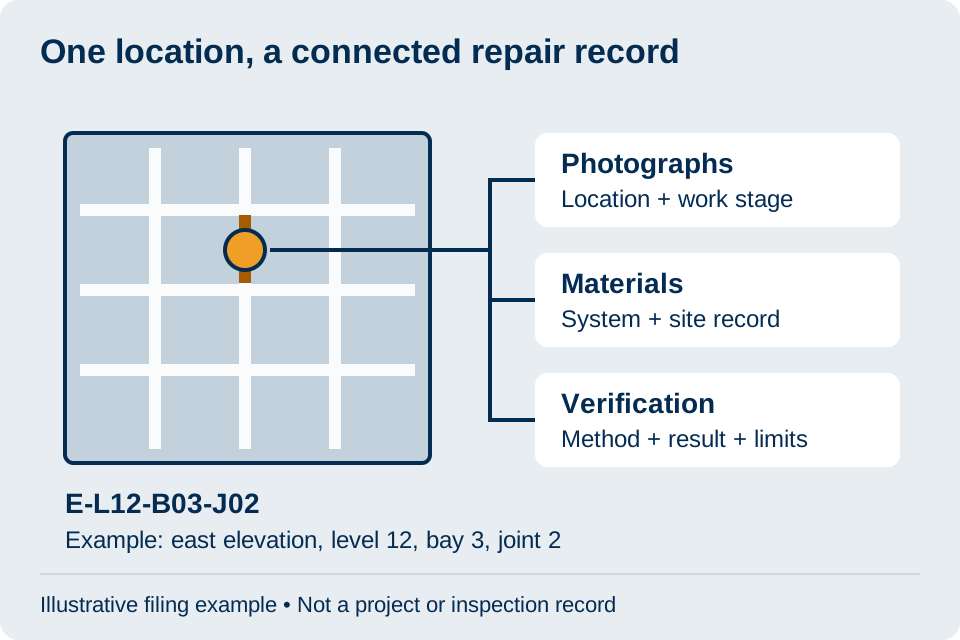
Get a free, no-obligation site inspection
Tell us what’s going wrong and we’ll diagnose the cause, explain your options in plain language, and quote, with no pressure to proceed.
Prefer to talk? Call +65 6289 6811 · We respond within 1 business day.